ReEnvisioned: Contemporary Portraits of Our Black Ancestors by Jeremy Okai Davis
Fine Arts
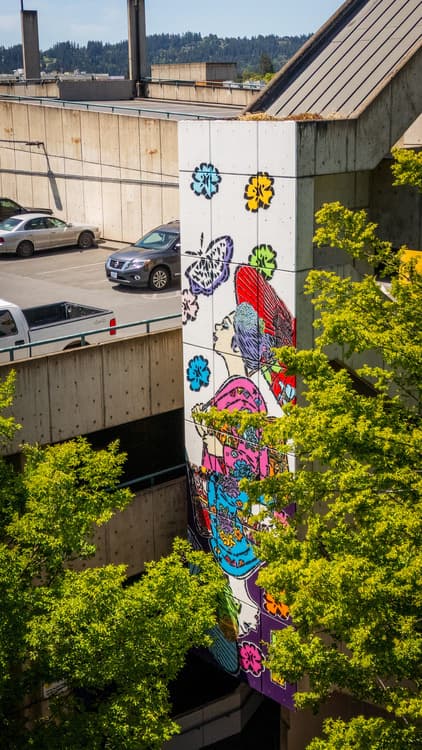
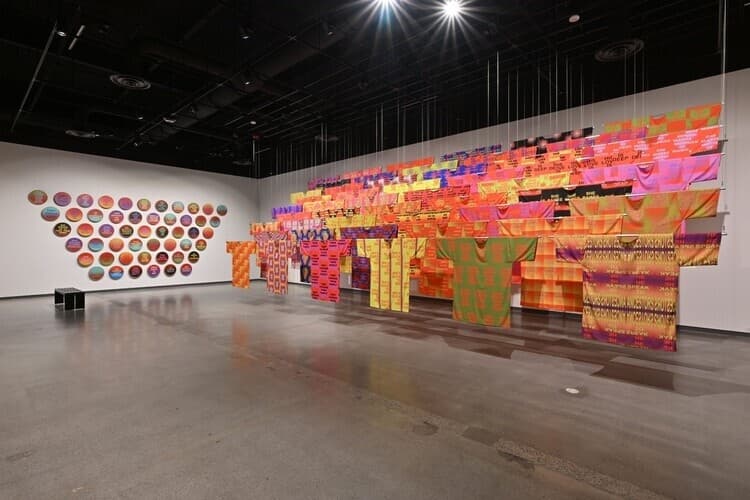
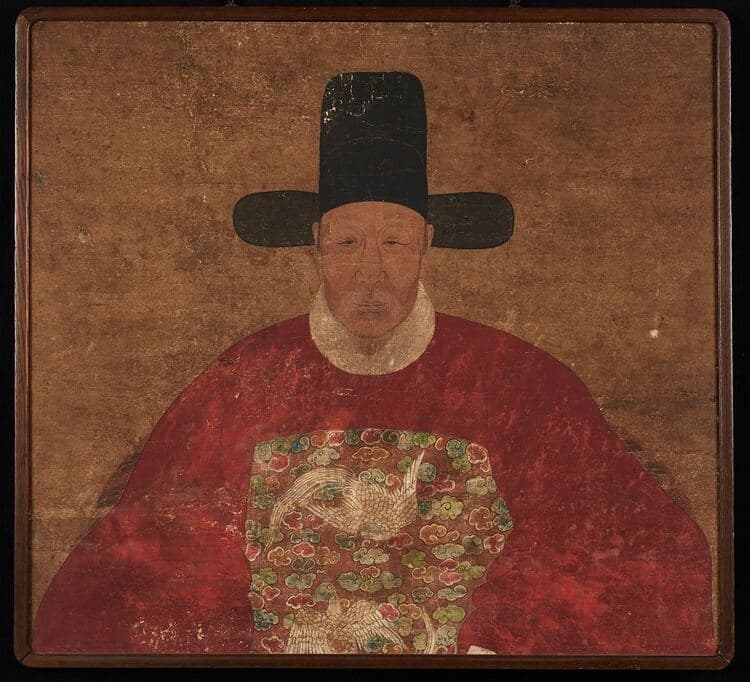
Meet Oregon’s early Black pioneers through colorful portraits that commemorate their role in shaping our state. Artist Jeremy Okai Davis illuminates their lives and asks us to consider how we remember our collective history. Davis's ten portraits of early Black residents of Oregon tell stories often left out of history, from a Civil War veteran to the editor of Oregon's largest Black newspaper. ReEnvisioned is traveled and presented by Salem Art Association.
10:00 AM - 8:00 PMEugene·Museum of Natural and Cultural History
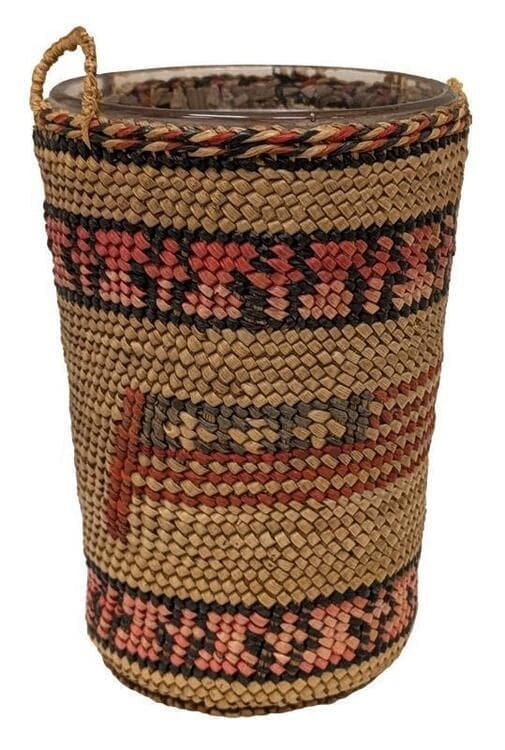
America’s history is the story of all of us. As the United States commemorates 250 years since the signing of the Declaration of Independence, come explore how our collections help preserve the diverse histories of this place. Featuring rarely seen items from our collection, America at 250 invites you to reflect on where we have been, who we are, and what America might yet become. Picture is a drinking glass with basket cover, made by Emma Adams (Tillamook/Clatsop), 1890s.
10:00 AM - 8:00 PMEugene·Museum of Natural and Cultural History
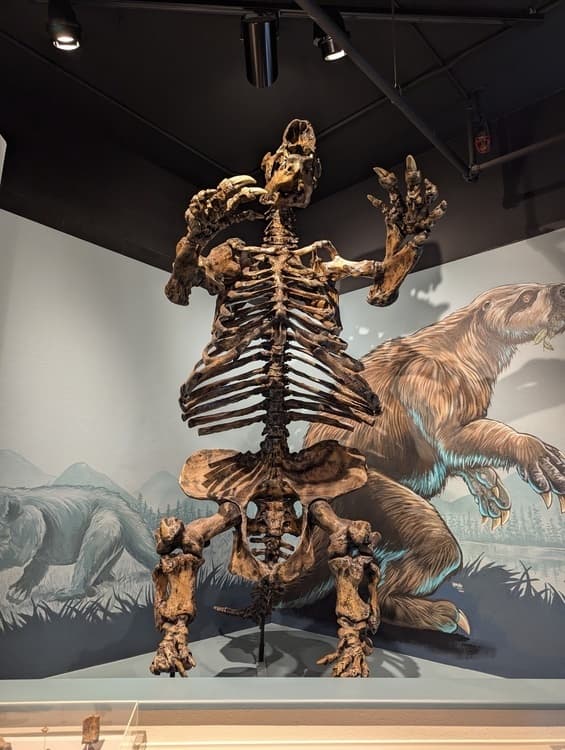
Experience the dynamic forces that shape Oregon’s landscapes, climate, and ecosystems. Meet giant salmon, Ice Age sloths, and other amazing animals from across the millennia. Meet giant salmon, Ice Age sloths, and other amazing animals from across the millennia. Through interactive displays and rare specimens, you’ll go deep into Oregon’s past and join a conversation about our collective future. Included with regular admission; free for MNCH members and UO ID card holders. Show your Oregon Trail or other EBT card for an admission discount.

10:00 AM - 8:00 PMEugene·Museum of Natural and Cultural History
Delve into Oregon’s story, from the archaeology of the First Americans to the dynamic cultures of today’s Tribes. Combining interactive displays with world-class anthropological collections, Oregon—Where Past is Present shares 14,000 years of Oregon stories, and invites you to tell your own. Explore the galleries, try your hand at ancient weaving styles, test your skills as an archaeologist, and much more Included with regular admission; free for MNCH members and UO ID card holders. Show your Oregon Trail or other EBT card for an admission discount.
10:00 AM - 8:00 PMUniversity / Campus·Museum of Natural and Cultural History
We’re creating a powerful space to inspire, educate and uplift the next generation of BIPOC leaders, creators and change-makers. https://www.eugene-or.gov/calendar.aspx?EID=36174
4:30 PM - 8:30 PMEugene·Farmers Market Pavilion and Plaza
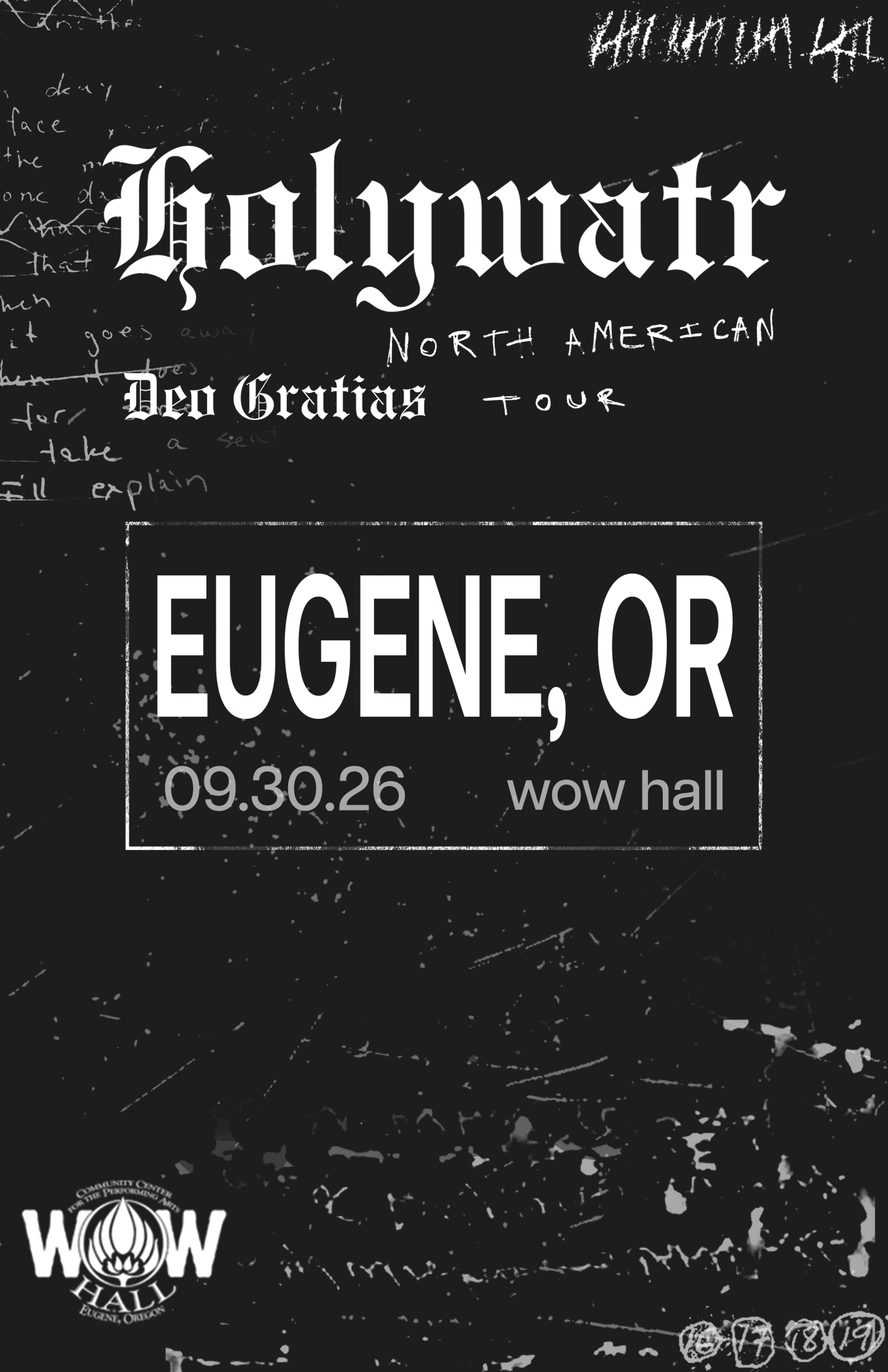
On Thursday, June 18th, 2026, Last Chance Presents and the Community Center for the Performing Arts proudly welcomes Guttermouth to the WOW Hall.
Formed in Huntington Beach, California in 1988, Guttermouth was heavily influenced by the Southern California punk rock scenes of the 1980s which spawned bands such as the Adolescents, The Vandals, Social Distortion, Fear, Descendents, Angry Samoans, Bad Religion and Black Flag. The band took these influences and developed their own style of fast, punk tempos with humorously sarcastic and offensive lyrics coupled with equally outrageous and offensive behavior, developing a reputation for chaotic live shows. Guttermouth is the perfect blend of what California-based punk rock is all about, one of the seminal bands in the US skate-punk scene.
OPENER: Grimedog
Grimedog is a band that combines punk and rock’n’roll, while also incorporating aspects of ska, blues, and classic rock.
OPENER: Cryptilians
A punk-adjacent band from Reno, NV. Very taut. No waste. Boiled down to the essence.
OPENER: Sargent Pitviper
Eugene punx united by youth empowerment and nonviolence.
Starting 07/14/2022
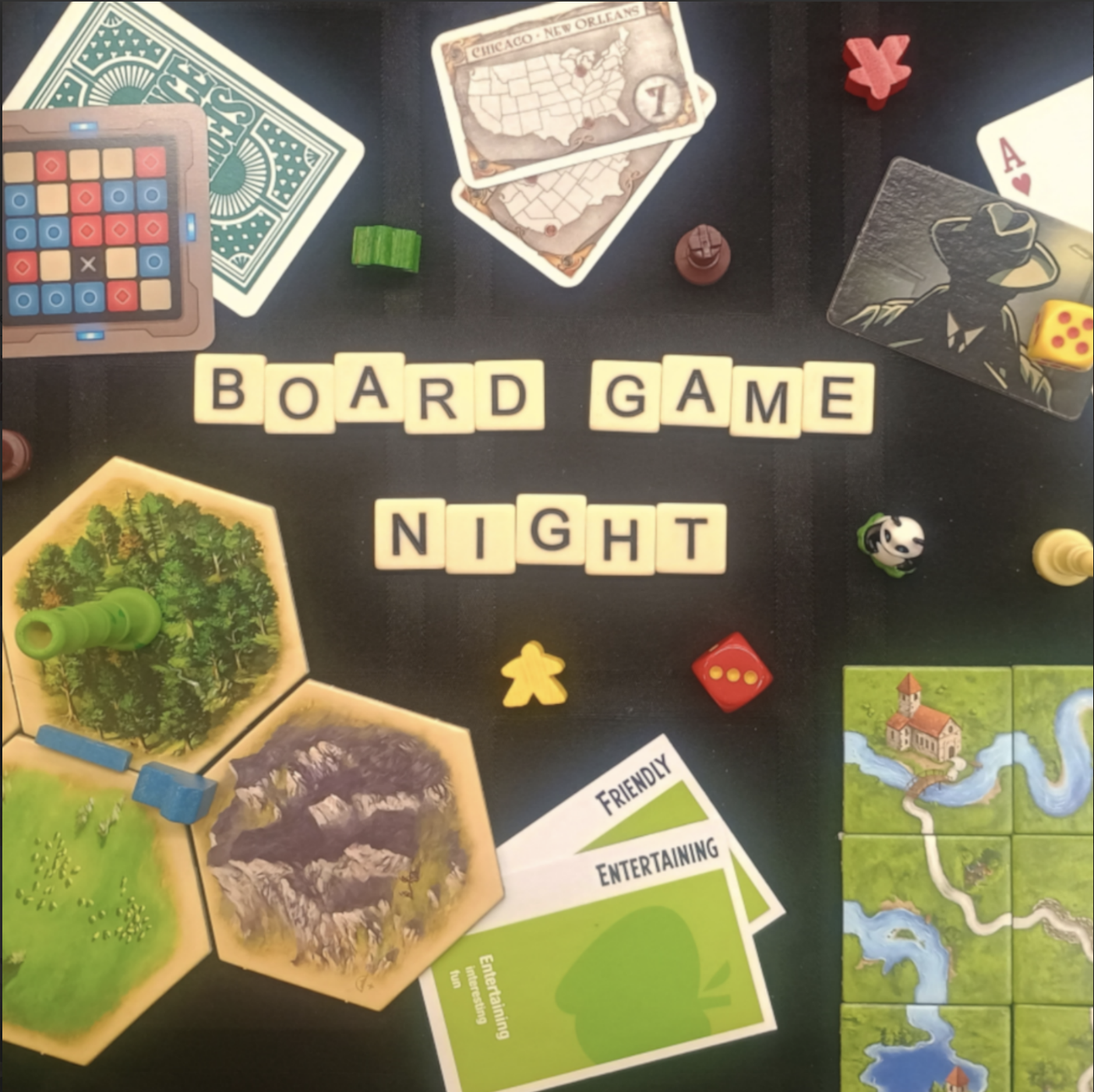
Beginners Board Game Night is a great opportunity to learn some new games and meet some new friends. It is also a great gathering for your family. Kids are welcome with age appropriate games
Starting 11/07/2024
Join Bingo Night at Twisted Duck Pub for CASA of Lane County. Challenge your friends to some friendly competition and support a great cause helping to provide vital advocacy for children in foster
06/18/2026 to
06/18/2026
The Axe & Fiddle hosts the Black Sage Runners for a powerful evening of blues and rock. Attendees will experience a high-energy performance featuring searing guitar solos, dynamic rhythm, and soulful
Bridges & Buttes: Whilamut River Walk & Nature Immersion
Other
02/11/2026 to
12/17/2026
Let's explore the beauty, history and culture of the Whilamut Natural Area, Eugene's riparian landscape with distinct river vibes, basalt buttes, bridges and trails. Through a series of guided
04/06/2026 to
10/31/2026
Enjoy lively, professional karaoke hosted by Caught In The Act Entertainment at various local venues throughout the week. Events feature high‑quality sound, extensive song libraries, and an energetic
06/18/2026 to
06/18/2026
The PLAY Cocktail Lounge hosts its weekly all-vinyl night featuring Eugene native DJ Wreck Shop spinning an eclectic mix of funk, hip-hop, and soul. Returning to the Pacific Northwest after hosting on
Starting 04/25/2024
The Drew Brew Crew is a running group that focuses on speed workouts. The group meets at various locations in Eugene (track, trails, and hills) for 3-mile intervals to build speed. Location and
06/18/2026 to
06/18/2026
Robin Greenfield hosts an inspiring look at his year-long journey of foraging every bite of his food and medicine — living without grocery stores, restaurants, pharmacies, or even a garden. For Robin,
04/18/2026 to
07/05/2026
Gateway to Himalayan Art is a special exhibition introducing the key forms, concepts, and living traditions of Himalayan art. Featuring religious works from the 13th through the 21st centuries, the
06/05/2026 to
06/21/2026
Intimate Apparel, by acclaimed playwright Lynn Nottage, tells the poignant story of Esther, a Black seamstress in 1905 New York who sews beautiful lingerie for women across the social spectrum. As she
06/18/2026 to
06/21/2026
Join PLAY for a celebration of light over the Summer Solstice Weekend. Thursday, June 18th meet the folks from Gold Dot and Heater Allen from 5-7pm. Friday, June 19th enjoy the musical styling of
06/26/2025 to
12/17/2026
This class is designed for senior women and those with limited mobility. Move at your own pace while learning to dance, connecting with others, getting light exercise, and enjoying yourself. Donations
01/09/2025 to
12/26/2026
Jazzy Ladies offers a vibrant live jazz experience, setting the perfect mood for a night out. With no cover charge, you can enjoy soulful tunes by talented musicians while indulging in delicious
Live Music on the Patio at Beergarden Thursdays & Saturdays
Live Music
07/24/2025 to
07/17/2027
beergarden hosts live music throughout the year: local, regional & national acts. Always all ages and always free. Join beergarden every Thursday and Saturday for Live on the Patio!
06/11/2026 to
06/21/2026
The Roving Park Players present William Shakespeare’s A Midsummer Night’s Dream in local parks throughout June 2026. Filled with romance, comedy, mischievous fairies, and a troupe of determined
Starting 07/18/2024
Join the volunteer work party every Thursday in the native plant garden at Hendricks Park. Learn about the Willamette Valley native plants and their uses while supporting the garden's continued
06/18/2026 to
06/21/2026
The National Scholastic Athletics Foundation will be hosting the Nike Outdoor Nationals at Hayward Field at the University of Oregon. This is the national high school track and field championships.
06/06/2026 to
06/30/2026
"One World, One Sky" allows children to explore and learn about the Big Dipper, the North Star, the Sun, and the Moon with everyone's favorite Sesame Street characters. Children can follow along and
Oregon Regional - Prospect National Baseball Tournament
Other
06/18/2026 to
06/21/2026
Thursday showcase style workout is run by college coaches. Friday starts a wood bat only tournament qualifier for the Chandler Bats Fall Invitational. Prospects National's focus is to provide players
Out There: The Quest for Extrasolar Worlds Planetarium Show
Other
06/02/2026 to
06/30/2026
Embark on a journey through the cosmos and discover how our understanding of the universe has evolved over time. Once believed to be the center of everything, Earth is now known to be just one of
06/18/2026 to
06/18/2026
Bring the beauty of the coast to canvas at the “Sand & Sea” Paint & Sip with Art With Alejandro. This relaxing, beginner-friendly class guides participants through creating a beach-inspired scene
Eugene·Art With Alejandro (5th Street Market Alley)
01/29/2026 to
01/31/2027
Enjoy a private one-hour Goat Happy Hour®, a goat therapy experience designed to help you unwind outdoors while connecting with animals in a beautiful setting. Includes a farm tour and goat snuggling.
Gateway to Himalayan Art is a special exhibition that introduces the main forms, concepts, meanings, and living traditions of Himalayan art. The exhibition features sublime religious art created from the 13th through the 21st centuries in Tibet, Nepal, China, and Mongolia, drawn from the permanent collection of the Rubin Museum of Himalayan Art, which organized the exhibition. At the start of the exhibition, a multimedia map orients visitors to the greater Himalayan region, which encompasses Indian, Nepalese, Bhutanese, and Tibetan cultures as well as interrelated Mongolian and Chinese traditions. Gateway to Himalayan Art invites exploration of these diverse cultural spheres through exemplary objects presented in three thematic sections: Symbols and Meanings, Materials and Technologies, and Living Practices. Traditional scroll paintings (thangkas), sculptures in various media, and ritual items comprise the diverse range of objects on view. Exhibition Thematic Sections The Symbols and Meanings section juxtaposes paintings and sculptures to introduce the iconography of Buddhas and bodhisattvas; Tantric, female, and wrathful deities; Hindu gods and goddesses; and spiritually accomplished humans such as arhats, Mahasiddhas, and great religious teachers (lamas). The Materials and Technologies section features in-depth displays detailing the making of a Tibetan thangka painting, the process of Nepalese lost-wax metal casting, the creation of clay, wood, and stone sculptures, and the fabrication of manuscripts and printed texts and images. It is augmented with artists’ tools and materials, and videos. The section on Living Practices uses paintings, sculptures, ritual implements, and medical instruments to explore sacred rituals undertaken by Buddhists to accrue spiritual merit and achieve secular aims. It also introduces traditions of narrative and instructive Buddhist paintings and concludes with an elaborate wooden shrine housing sacred images, texts, and ritual objects to encourage visitors to consider the original context of the kinds of devotional art featured in the exhibition. This traveling exhibition is organized and provided by the Rubin Museum of Himalayan Art and curated by Senior Curator of Himalayan Art Elena Pakhoutova. Gateway to Himalayan Art is an integral component of the Rubin Museum’s Project Himalayan Art, a three-part initiative that also includes the publication Himalayan Art in 108 Objects and a digital platform. Together they provide introductory resources for learning about and teaching Himalayan art. In addition to introducing an astonishing array of beautiful and meaningful works of art, Gateway to Himalayan Art includes informative videos explaining a variety of religious, cultural, and artistic practices, audio recordings from Himalayan communities that highlight living traditions, and opportunities to dive deeper into the rich contextual material available on the Rubin’s integrated digital platform. In conjunction with the JSMA’s presentation of Gateway to Himalayan Art, the Rubin is generously lending two additional global contemporary works by Shraddha Shrestha and Tsherin Sherpa that include elements from traditional Himalayan Buddhist art to welcome visitors in the museum lobby. Gateway to Himalayan Art has already been shown at the Lehigh University Art Galleries in Bethlehem, Pennsylvania, and the McMullen Museum of Art at Boston College in 2023; the Harn Museum of Art at the University of Florida in Gainesville and the Frank Museum of Art at Otterbein University in Westerville, Ohio, in 2024; and the Utah Museum of Fine Arts at the University of Utah in Salt Lake City and the Flaten Art Museum at St. Olaf College in Northfield, Minnesota, in 2025. After it closes at the JSMA, the exhibition will travel to the USC Pacific Asia Museum at the University of Southern California in Pasadena. The Rubin recently transitioned to being a “museum without walls,” sharing its collection and expertise through traveling exhibitions, object loans, grant opportunities, and partnerships with the goal of encouraging understanding and appreciation of Himalayan art worldwide.
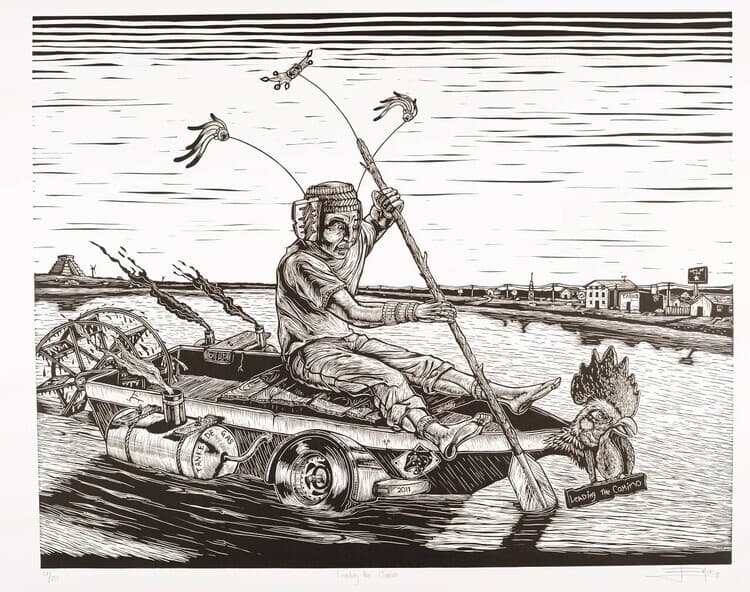
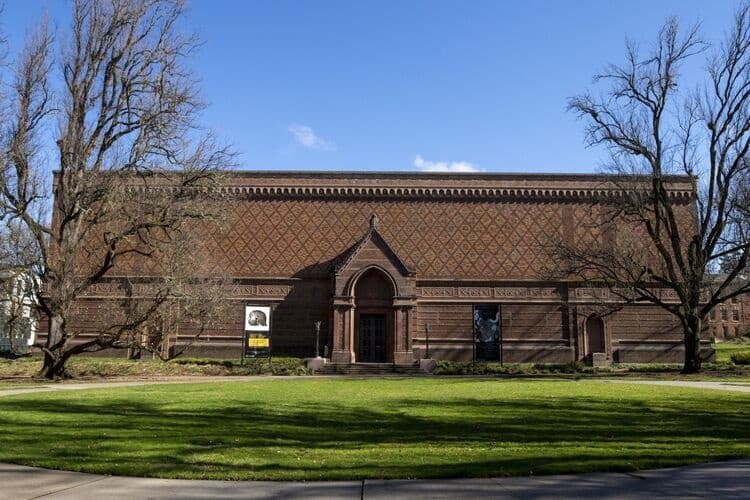
For nearly a century, the Jordan Schnitzer Museum of Art has provided students, faculty, and the broader community opportunities to connect with works of art across time periods and cultures. Initially founded in 1933 as an Asian art museum with the generous donation of Gertrude Bass Warner’s collection of over 3,700 works of art, the museum’s collecting interests have since broadened to artworks from around the world that provide even more opportunities for cross-cultural and curricular connections. JSMA began collecting American and regional art in the 1960s, and now stewards work by artists from the United States, Mesoamerica, contemporary Mexico, Cuba, Puerto Rico, and other areas of the Caribbean and across the Americas. With our recent acquisitions, the museum aims to reflect the voices and experiences of diverse audiences and the new and evolving ideas, insights, and conversations presented by artists in work that both shapes and responds to culture. Collecting America: Recent Acquisitions presents a selection of artworks from the museum’s permanent collection that demonstrate our commitment to understandings of American art informed by perspectives from local, national, and internationally recognized artists. Through various materials and practices, the featured artists demonstrate the great diversity of art made in or in response to the United States of America. These works invite viewers to participate in conversations on identity, place, politics, and other issues facing our world today. This exhibition is organized by JSMA executive director Olivia Miller and curators Katie Loney, Danielle Knapp, and Thom Sempere, with graduate student interns Aidyn Dervaes (MA candidate, History of Art and Architecture), Parisa Garazhian (MFA candidate, Studio Art), and Lorna Isaacson (MA candidate, History of Art and Architecture).
Evolution of a Moment: The Photographs of Brian Lanker
Fine Arts
View prints, contact sheets, editorial records, and correspondence from local legend and Pulitzer Prize-winning photographer Brian Lanker (1947-2011). Four distinctive themes and eras are on display: Photojournalism shot for The Eugene Register-Guard, 1974-1982Sports photography featuring UO athletes and eventsIconic portraits of pop-culture figures from the 1980s and ’90sI Dream a World, an acclaimed portrait series of trailblazing Black womenAvailable to view during library open hours: https://library.uoregon.edu/knight-library-hours
Navigating Through Centuries: From Ancient to Global Contemporary in Korean Art
Fine Arts
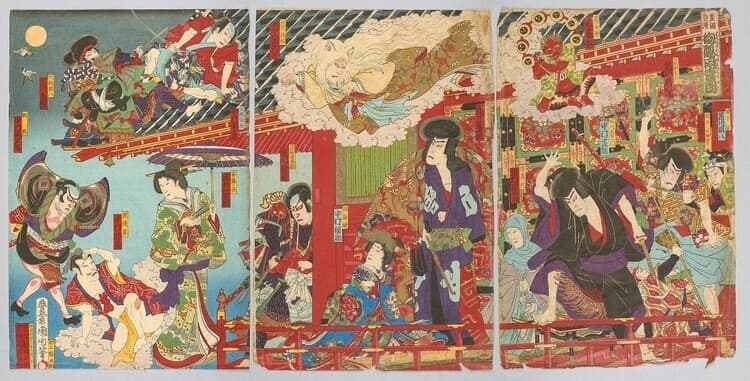
Navigating Through Centuries surveys the complex trajectory of art in Korea, which was significantly impacted by socio-political upheaval and cultural developments from the fifth century to the present. The exhibition is comprised of six chronological thematic sections — from the power and religion of the Three Kingdoms period (57 BCE–668 CE), to the refined aristocratic ideals of the Goryeo (918–1392) and Confucian governance of the Joseon (1392–1910) dynasties, through vestiges of tradition after the Korean War (1950–1953), experimental practices during the modern era, and globalization of contemporary art. Each section examines how aesthetic practices respond to the evolving philosophies, ideologies, critical events, and issues of a specific historical period. The exhibition begins with materials from the Three Kingdoms period in which are embedded political/religious authority and communal rituals, laying the foundation for Korean cultural memory. The Goryeo dynasty section highlights the refined aesthetics and Buddhist motifs that reflect aristocratic ideals and literati culture, while also indicating Korea’s participation in East Asian cultural exchange. The Joseon section showcases art that embodies the Confucian literati values that fundamentally shaped the moral order, governance, and cultural life of the period. The modern and contemporary sections focus on twentieth-century art, which has continually questioned, responded to, and been shaped by the last tumultuous century of Korean history. The first postwar section features art that portrays the remnants of indigenous culture in the aftermath of the Korean War. The next section presents experimental works by artists who challenged the canon of art by blurring boundaries of cultures, genres, and mediums. The final section showcases global contemporary art by diasporic creators, many of whom have played central roles in integrating Korean art into the international mainstream. Navigating Through Centuries narrates the conflicted yet intertwined relationships between art and culture, individuals and communities, and socio-politics and history, inviting audiences to consider the broad history of Korea through the lens of art. The exhibition was curated by Soojin Jeong, 2023–2026 Post-Graduate Curatorial Fellow in East Asian Art, as well as Heejung Chang, 2025–2026 JSMA/Korea Foundation Global Challengers Museum Intern.
06/11/2026 to
10/29/2026
Come enjoy another summer of the Amazon Farmers Market in South Eugene! Shop a variety of vendors and growers selling local produce and Oregon-crafted products including vegetables, fruit, honey and
Art Exhibit by Uyen-Thi Nguyen at New Zone Gallery
Fine Arts
06/06/2026 to
06/28/2026
Human vulnerability takes center stage at “Awakening,” a striking solo exhibition by acclaimed Oregon oil painter Uyen-Thi Nguyen. The evocative collection explores the connections people form with
06/01/2025 to
06/01/2027
The City of Florence celebrates a rotating outdoor art gallery. Tour the current eight art installations in the Historic Old Town area at Veterans Memorial Park, River Roasters, Rain Garden,
America’s history is the story of all of us. As the United States commemorates 250 years since the signing of the Declaration of Independence, come explore how our collections help preserve the diverse histories of this place. Featuring rarely seen items from our collection, America at 250 invites you to reflect on where we have been, who we are, and what America might yet become. Picture is a drinking glass with basket cover, made by Emma Adams (Tillamook/Clatsop), 1890s.
10:00 AM - 5:00 PMEugene·Museum of Natural and Cultural History
ReEnvisioned: Contemporary Portraits of Our Black Ancestors by Jeremy Okai Davis
Fine Arts
Meet Oregon’s early Black pioneers through colorful portraits that commemorate their role in shaping our state. Artist Jeremy Okai Davis illuminates their lives and asks us to consider how we remember our collective history. Davis's ten portraits of early Black residents of Oregon tell stories often left out of history, from a Civil War veteran to the editor of Oregon's largest Black newspaper. ReEnvisioned is traveled and presented by Salem Art Association.
10:00 AM - 5:00 PMEugene·Museum of Natural and Cultural History
Delve into Oregon’s story, from the archaeology of the First Americans to the dynamic cultures of today’s Tribes. Combining interactive displays with world-class anthropological collections, Oregon—Where Past is Present shares 14,000 years of Oregon stories, and invites you to tell your own. Explore the galleries, try your hand at ancient weaving styles, test your skills as an archaeologist, and much more Included with regular admission; free for MNCH members and UO ID card holders. Show your Oregon Trail or other EBT card for an admission discount.
10:00 AM - 5:00 PMUniversity / Campus·Museum of Natural and Cultural History
Experience the dynamic forces that shape Oregon’s landscapes, climate, and ecosystems. Meet giant salmon, Ice Age sloths, and other amazing animals from across the millennia. Meet giant salmon, Ice Age sloths, and other amazing animals from across the millennia. Through interactive displays and rare specimens, you’ll go deep into Oregon’s past and join a conversation about our collective future. Included with regular admission; free for MNCH members and UO ID card holders. Show your Oregon Trail or other EBT card for an admission discount.
10:00 AM - 5:00 PMEugene·Museum of Natural and Cultural History
The Rhythm and Resilience Juneteenth Celebration is a vibrant community gathering that honors freedom, resilience, culture and joy. https://www.eugene-or.gov/calendar.aspx?EID=36201
City Club of Eugene is moving its weekly programs to the WOW Hall on Fridays at 12 p.m. This historic venue is located at 8th and Lincoln (291 West 8th) and has a beautiful meeting space.
The building is on the west end of the downtown commercial district so it’s easy to get there via walking, biking or bussing. Plus, you can use metered parking around the building or park across 8th in the FOOD for Lane County parking lot south of the WOW Hall. A freewill donation can be made to support FFLC’s generosity.
For more information about City Club of Eugene visit https://cityclubofeugene.org/
Returning for its third year, the Juneteenth Gathering is a community celebration honoring the history, resilience and achievements of African Americans while commemorating the end of slavery in the United States. https://www.eugene-or.gov/calendar.aspx?EID=36175
3:00 PM - 8:00 PMEugene·Farmers Market Pavilion and Plaza
The Community Center for the Performing Arts is pleased to welcome Terrapin Flyer back to the WOW Hall on Friday, June 19th and Saturday, June 20th.
Join us at the WOW Hall for a multi-day concert and event! For the past 25 years Terrapin Flyer has been touring with the finest in the Grateful Dead community of musicians and has become a fixture of the national music scene, playing regularly at venues around the country and appearing at music festivals. The band has a dedicated following among fans of the Grateful Dead and other jam bands, and is known for their authentic interpretations of rare and classic Dead songs. Over the years, Terrapin Flyer has toured with many notable musicians, including Melvin Seals from the Jerry Garcia Band, Vince Welnick, Tom Constanten from the Grateful Dead and many other Dead-related musicians. Overall, Terrapin Flyer is a talented and highly regarded band that has made a significant impact on the national music scene. Doors open to the public at 7 PM, with special, early access available for C.C.P.A. members with tickets beginning at 6 PM.
There will be one show on Friday, June 19th and another on Saturday, June 20th with a Pre-Concert BBQ open exclusively to C.C.P.A. members beginning at 2 PM on Saturday June 20th. For more information on this C.C.P.A. member event, please visit the Membership Party & Pre-Concert BBQ page here on our website. Current members can attend the Pre-Party for free with two guests – if you aren’t a member yet, join today! Members can also access discounted tickets on June 19th & 20th by calling or stopping by the WOW Hall box office Monday-Friday, 1-5 PM, or purchasing at the door before the show.
Buy Tickets for Friday, June 19th
Buy Tickets for Saturday, June 20th
If you join the C.C.P.A. as a member, not only can you get discounted tickets and come to the Picnic on June 20th; you get lots of perks!
C.C.P.A. Membership Benefits Include:
Early Notice & Pre-Sales: Members get advance email alerts with pre-sale access codes, allowing them to buy tickets before the general public.
Early Entry to Select Events: members can skip lines and enter early at select shows. Including the Terrapin Flyer show on Saturday, June 20th!
Quarterly Giveaways & Perks: Members are automatically entered into drawings for free tickets and merchandise.
Annual “NOTES” Publication: A yearly digital magazine featuring artist profiles, stories, and behind-the-scenes insights at WOW Hall.
Voting Privileges: Members can vote in annual board elections, helping shape the future of WOW Hall.
Annual Member Celebration: An exclusive free event with food, music, and community to celebrate members.
This membership not only enhances your concert-going experience but also supports the vibrant performing arts community in your area.
Support Your Community Center for the Performing Arts!
Evolution of a Moment: The Photographs of Brian Lanker
Fine Arts
View prints, contact sheets, editorial records, and correspondence from local legend and Pulitzer Prize-winning photographer Brian Lanker (1947-2011). Four distinctive themes and eras are on display: Photojournalism shot for The Eugene Register-Guard, 1974-1982Sports photography featuring UO athletes and eventsIconic portraits of pop-culture figures from the 1980s and ’90sI Dream a World, an acclaimed portrait series of trailblazing Black womenAvailable to view during library open hours: https://library.uoregon.edu/knight-library-hours
For nearly a century, the Jordan Schnitzer Museum of Art has provided students, faculty, and the broader community opportunities to connect with works of art across time periods and cultures. Initially founded in 1933 as an Asian art museum with the generous donation of Gertrude Bass Warner’s collection of over 3,700 works of art, the museum’s collecting interests have since broadened to artworks from around the world that provide even more opportunities for cross-cultural and curricular connections. JSMA began collecting American and regional art in the 1960s, and now stewards work by artists from the United States, Mesoamerica, contemporary Mexico, Cuba, Puerto Rico, and other areas of the Caribbean and across the Americas. With our recent acquisitions, the museum aims to reflect the voices and experiences of diverse audiences and the new and evolving ideas, insights, and conversations presented by artists in work that both shapes and responds to culture. Collecting America: Recent Acquisitions presents a selection of artworks from the museum’s permanent collection that demonstrate our commitment to understandings of American art informed by perspectives from local, national, and internationally recognized artists. Through various materials and practices, the featured artists demonstrate the great diversity of art made in or in response to the United States of America. These works invite viewers to participate in conversations on identity, place, politics, and other issues facing our world today. This exhibition is organized by JSMA executive director Olivia Miller and curators Katie Loney, Danielle Knapp, and Thom Sempere, with graduate student interns Aidyn Dervaes (MA candidate, History of Art and Architecture), Parisa Garazhian (MFA candidate, Studio Art), and Lorna Isaacson (MA candidate, History of Art and Architecture).
Navigating Through Centuries: From Ancient to Global Contemporary in Korean Art
Fine Arts
Navigating Through Centuries surveys the complex trajectory of art in Korea, which was significantly impacted by socio-political upheaval and cultural developments from the fifth century to the present. The exhibition is comprised of six chronological thematic sections — from the power and religion of the Three Kingdoms period (57 BCE–668 CE), to the refined aristocratic ideals of the Goryeo (918–1392) and Confucian governance of the Joseon (1392–1910) dynasties, through vestiges of tradition after the Korean War (1950–1953), experimental practices during the modern era, and globalization of contemporary art. Each section examines how aesthetic practices respond to the evolving philosophies, ideologies, critical events, and issues of a specific historical period. The exhibition begins with materials from the Three Kingdoms period in which are embedded political/religious authority and communal rituals, laying the foundation for Korean cultural memory. The Goryeo dynasty section highlights the refined aesthetics and Buddhist motifs that reflect aristocratic ideals and literati culture, while also indicating Korea’s participation in East Asian cultural exchange. The Joseon section showcases art that embodies the Confucian literati values that fundamentally shaped the moral order, governance, and cultural life of the period. The modern and contemporary sections focus on twentieth-century art, which has continually questioned, responded to, and been shaped by the last tumultuous century of Korean history. The first postwar section features art that portrays the remnants of indigenous culture in the aftermath of the Korean War. The next section presents experimental works by artists who challenged the canon of art by blurring boundaries of cultures, genres, and mediums. The final section showcases global contemporary art by diasporic creators, many of whom have played central roles in integrating Korean art into the international mainstream. Navigating Through Centuries narrates the conflicted yet intertwined relationships between art and culture, individuals and communities, and socio-politics and history, inviting audiences to consider the broad history of Korea through the lens of art. The exhibition was curated by Soojin Jeong, 2023–2026 Post-Graduate Curatorial Fellow in East Asian Art, as well as Heejung Chang, 2025–2026 JSMA/Korea Foundation Global Challengers Museum Intern.
Gateway to Himalayan Art is a special exhibition that introduces the main forms, concepts, meanings, and living traditions of Himalayan art. The exhibition features sublime religious art created from the 13th through the 21st centuries in Tibet, Nepal, China, and Mongolia, drawn from the permanent collection of the Rubin Museum of Himalayan Art, which organized the exhibition. At the start of the exhibition, a multimedia map orients visitors to the greater Himalayan region, which encompasses Indian, Nepalese, Bhutanese, and Tibetan cultures as well as interrelated Mongolian and Chinese traditions. Gateway to Himalayan Art invites exploration of these diverse cultural spheres through exemplary objects presented in three thematic sections: Symbols and Meanings, Materials and Technologies, and Living Practices. Traditional scroll paintings (thangkas), sculptures in various media, and ritual items comprise the diverse range of objects on view. Exhibition Thematic Sections The Symbols and Meanings section juxtaposes paintings and sculptures to introduce the iconography of Buddhas and bodhisattvas; Tantric, female, and wrathful deities; Hindu gods and goddesses; and spiritually accomplished humans such as arhats, Mahasiddhas, and great religious teachers (lamas). The Materials and Technologies section features in-depth displays detailing the making of a Tibetan thangka painting, the process of Nepalese lost-wax metal casting, the creation of clay, wood, and stone sculptures, and the fabrication of manuscripts and printed texts and images. It is augmented with artists’ tools and materials, and videos. The section on Living Practices uses paintings, sculptures, ritual implements, and medical instruments to explore sacred rituals undertaken by Buddhists to accrue spiritual merit and achieve secular aims. It also introduces traditions of narrative and instructive Buddhist paintings and concludes with an elaborate wooden shrine housing sacred images, texts, and ritual objects to encourage visitors to consider the original context of the kinds of devotional art featured in the exhibition. This traveling exhibition is organized and provided by the Rubin Museum of Himalayan Art and curated by Senior Curator of Himalayan Art Elena Pakhoutova. Gateway to Himalayan Art is an integral component of the Rubin Museum’s Project Himalayan Art, a three-part initiative that also includes the publication Himalayan Art in 108 Objects and a digital platform. Together they provide introductory resources for learning about and teaching Himalayan art. In addition to introducing an astonishing array of beautiful and meaningful works of art, Gateway to Himalayan Art includes informative videos explaining a variety of religious, cultural, and artistic practices, audio recordings from Himalayan communities that highlight living traditions, and opportunities to dive deeper into the rich contextual material available on the Rubin’s integrated digital platform. In conjunction with the JSMA’s presentation of Gateway to Himalayan Art, the Rubin is generously lending two additional global contemporary works by Shraddha Shrestha and Tsherin Sherpa that include elements from traditional Himalayan Buddhist art to welcome visitors in the museum lobby. Gateway to Himalayan Art has already been shown at the Lehigh University Art Galleries in Bethlehem, Pennsylvania, and the McMullen Museum of Art at Boston College in 2023; the Harn Museum of Art at the University of Florida in Gainesville and the Frank Museum of Art at Otterbein University in Westerville, Ohio, in 2024; and the Utah Museum of Fine Arts at the University of Utah in Salt Lake City and the Flaten Art Museum at St. Olaf College in Northfield, Minnesota, in 2025. After it closes at the JSMA, the exhibition will travel to the USC Pacific Asia Museum at the University of Southern California in Pasadena. The Rubin recently transitioned to being a “museum without walls,” sharing its collection and expertise through traveling exhibitions, object loans, grant opportunities, and partnerships with the goal of encouraging understanding and appreciation of Himalayan art worldwide.
The Lane County Farmers Market is Eugene’s largest farmers market, providing locally grown foods from over 100 member farmers and food artisans. The market is year-round, and all items are grown or produced in Oregon.
We welcome EBT/SNAP users, and provide them the opportunity for a $20 Double Up Food Buck match at all markets to be used on fresh produce. See the LCFM Information Booth for more details.
9:00 AM - 2:00 PMEugene·Farmers Market Pavilion and Plaza
MOVEMENT AS MEDICINE
The mission of Dance Empowered is to create an inclusive, community-oriented, dance experience for the purpose of mutual upliftment, movement of stagnant energy and stress, and fearless engagement in emotional expression through dance. Dance ability is NOT a requirement. The full throttle approach to each and every class sets an electrifying tone that keeps the class celebratory and full of exhilaration. Each class and the remarkable (and huge!) community of dancers who come are heart-forward and the experience is designed to inspire freedom, radical self-acceptance, and EMPOWERMENT.
Dancers are encouraged to join the choreography with a “you do you” mentality bringing their own flair and feeling to the moves. The music and the movements are powerful, emotive, sexy, explosive, and inspiring. Each song has been carefully selected to be evocative and get the group to FEEL into the movements in lieu of executing each step “perfectly”. People often report experiencing incredible emotional and cathartic experiences.
THIS IS A SAFE SPACE. Dancers are encouraged to express themselves freely without threat of emotionality or sexuality being co-opted, exploited, or consumed by anyone else in the room. The power of your life force energy is for YOU to enjoy. This is about experience and NOT performance.
I encourage a “don’t hold back” policy and dancers regularly jump on stage to join me in leading the choreography. While the class ranges in intensity, dancers are encourage to take breaks and pace themselves in whatever way feels right for them. You are encouraged to bring water, wear sneakers with low tread on the soles, and be prepared to sweat and smile your face off.
PLEASE VISIT “CYNTHIA VALENTINE DANCE EMPOWERED” ON FACEBOOK FOR SCHEDULES AND CHOREOGRAPHY TUTORIAL VIDEOS.
Event Links:
https://www.facebook.com/cynthia.danceempowered
America’s history is the story of all of us. As the United States commemorates 250 years since the signing of the Declaration of Independence, come explore how our collections help preserve the diverse histories of this place. Featuring rarely seen items from our collection, America at 250 invites you to reflect on where we have been, who we are, and what America might yet become. Picture is a drinking glass with basket cover, made by Emma Adams (Tillamook/Clatsop), 1890s.
10:00 AM - 5:00 PMEugene·Museum of Natural and Cultural History
Experience the dynamic forces that shape Oregon’s landscapes, climate, and ecosystems. Meet giant salmon, Ice Age sloths, and other amazing animals from across the millennia. Meet giant salmon, Ice Age sloths, and other amazing animals from across the millennia. Through interactive displays and rare specimens, you’ll go deep into Oregon’s past and join a conversation about our collective future. Included with regular admission; free for MNCH members and UO ID card holders. Show your Oregon Trail or other EBT card for an admission discount.
10:00 AM - 5:00 PMEugene·Museum of Natural and Cultural History
Delve into Oregon’s story, from the archaeology of the First Americans to the dynamic cultures of today’s Tribes. Combining interactive displays with world-class anthropological collections, Oregon—Where Past is Present shares 14,000 years of Oregon stories, and invites you to tell your own. Explore the galleries, try your hand at ancient weaving styles, test your skills as an archaeologist, and much more Included with regular admission; free for MNCH members and UO ID card holders. Show your Oregon Trail or other EBT card for an admission discount.
10:00 AM - 5:00 PMUniversity / Campus·Museum of Natural and Cultural History
ReEnvisioned: Contemporary Portraits of Our Black Ancestors by Jeremy Okai Davis
Fine Arts
Meet Oregon’s early Black pioneers through colorful portraits that commemorate their role in shaping our state. Artist Jeremy Okai Davis illuminates their lives and asks us to consider how we remember our collective history. Davis's ten portraits of early Black residents of Oregon tell stories often left out of history, from a Civil War veteran to the editor of Oregon's largest Black newspaper. ReEnvisioned is traveled and presented by Salem Art Association.
10:00 AM - 5:00 PMEugene·Museum of Natural and Cultural History
It's time for the 5th Annual eBike Expo. Stop by to test ride electric bikes, scooters, and more from a variety of Eugene's bike shops in one place. https://www.eugene-or.gov/calendar.aspx?EID=36758
11:00 AM - 3:00 PMEugene·Campbell Community Center
The Community Center for the Performing Arts (C.C.P.A.) is offering a fantastic opportunity for music lovers and supporters of the arts: the Terrapin Flyer Pre-Concert BBQ and Picnic, exclusively for C.C.P.A. members and their guests on Saturday, June 20th. Become a member today!
This event includes a special meet and greet with the band Terrapin Flyer, making it a unique experience for fans! Enjoy the company of other C.C.P.A. members, food, and family-friendly activities inside and outside of the WOW Hall beginning at 2 PM on Saturday, June 20th. Members can also get discounted tickets to the show, and those with concert tickets can get early access to the Hall starting at 6 PM, with doors for the public opening at 7 PM and the show at 8 PM.
We are grateful to our Presenting Sponsor: The Law Offices of Lourdes Sánchez, PC
Additional support for the Summer 2026 Membership Party courtesy of:
Market of Choice — Capella Market — Sundance Natural Foods — Surata Soyfood — Trader Joe’s — Costco
Terrapin Flyer:
For the past 25 years Terrapin Flyer has been touring with the finest in the Grateful Dead community of musicians and has become a fixture of the national music scene, playing regularly at venues around the country and appearing at music festivals. The band has a dedicated following among fans of the Grateful Dead and other jam bands, and is known for their authentic interpretations of rare and classic Dead songs. Over the years, Terrapin Flyer has toured with many notable musicians, including Melvin Seals from the Jerry Garcia Band, Vince Welnick, Tom Constanten from the Grateful Dead and many other Dead-related musicians. Overall, Terrapin Flyer is a talented and highly regarded band that has made a significant impact on the national music scene.
Buy Tickets for Friday, June 19th
Buy Tickets for Saturday, June 20th
Current members can attend the Pre-Party for free with two guests! If you aren’t a member yet, join today! In addition to the Picnic, new and established C.C.P.A. members can access a discounted ticket for the Terrapin Flyer shows on June 19th & 20th by calling the C.C.P.A. box office or by stopping by the box office during office hours (Monday-Friday, 1-5 PM).
C.C.P.A. Membership Benefits Include:
Early Notice & Pre-Sales: Members get advance email alerts with pre-sale access codes, allowing them to buy tickets before the general public.
Early Entry to Select Events: members can skip lines and enter early at select shows. Including the Terrapin Flyer show on Saturday, June 20th!
Quarterly Giveaways & Perks: Members are automatically entered into drawings for free tickets and merchandise.
Annual “NOTES” Publication: A yearly digital magazine featuring artist profiles, stories, and behind-the-scenes insights at WOW Hall.
Voting Privileges: Members can vote in annual board elections, helping shape the future of WOW Hall.
Annual Member Celebration: An exclusive free event with food, music, and community to celebrate members.
This membership not only enhances your concert-going experience but also supports the vibrant performing arts community in your area.
Support Your Community Center for the Performing Arts!
The Community Center for the Performing Arts is pleased to welcome Terrapin Flyer back to the WOW Hall on Friday, June 19th and Saturday, June 20th.
Join us at the WOW Hall for a multi-day concert and event! For the past 25 years Terrapin Flyer has been touring with the finest in the Grateful Dead community of musicians and has become a fixture of the national music scene, playing regularly at venues around the country and appearing at music festivals. The band has a dedicated following among fans of the Grateful Dead and other jam bands, and is known for their authentic interpretations of rare and classic Dead songs. Over the years, Terrapin Flyer has toured with many notable musicians, including Melvin Seals from the Jerry Garcia Band, Vince Welnick, Tom Constanten from the Grateful Dead and many other Dead-related musicians. Overall, Terrapin Flyer is a talented and highly regarded band that has made a significant impact on the national music scene. Doors open to the public at 7 PM, with special, early access available for C.C.P.A. members with tickets beginning at 6 PM.
There will be one show on Friday, June 19th and another on Saturday, June 20th with a Pre-Concert BBQ open exclusively to C.C.P.A. members beginning at 2 PM on Saturday June 20th. For more information on this C.C.P.A. member event, please visit the Membership Party & Pre-Concert BBQ page here on our website. Current members can attend the Pre-Party for free with two guests – if you aren’t a member yet, join today! Members can also access discounted tickets on June 19th & 20th by calling or stopping by the WOW Hall box office Monday-Friday, 1-5 PM, or purchasing at the door before the show.
Buy Tickets for Friday, June 19th
Buy Tickets for Saturday, June 20th
If you join the C.C.P.A. as a member, not only can you get discounted tickets and come to the Picnic on June 20th; you get lots of perks!
C.C.P.A. Membership Benefits Include:
Early Notice & Pre-Sales: Members get advance email alerts with pre-sale access codes, allowing them to buy tickets before the general public.
Early Entry to Select Events: members can skip lines and enter early at select shows. Including the Terrapin Flyer show on Saturday, June 20th!
Quarterly Giveaways & Perks: Members are automatically entered into drawings for free tickets and merchandise.
Annual “NOTES” Publication: A yearly digital magazine featuring artist profiles, stories, and behind-the-scenes insights at WOW Hall.
Voting Privileges: Members can vote in annual board elections, helping shape the future of WOW Hall.
Annual Member Celebration: An exclusive free event with food, music, and community to celebrate members.
This membership not only enhances your concert-going experience but also supports the vibrant performing arts community in your area.
Support Your Community Center for the Performing Arts!
Gateway to Himalayan Art is a special exhibition that introduces the main forms, concepts, meanings, and living traditions of Himalayan art. The exhibition features sublime religious art created from the 13th through the 21st centuries in Tibet, Nepal, China, and Mongolia, drawn from the permanent collection of the Rubin Museum of Himalayan Art, which organized the exhibition. At the start of the exhibition, a multimedia map orients visitors to the greater Himalayan region, which encompasses Indian, Nepalese, Bhutanese, and Tibetan cultures as well as interrelated Mongolian and Chinese traditions. Gateway to Himalayan Art invites exploration of these diverse cultural spheres through exemplary objects presented in three thematic sections: Symbols and Meanings, Materials and Technologies, and Living Practices. Traditional scroll paintings (thangkas), sculptures in various media, and ritual items comprise the diverse range of objects on view. Exhibition Thematic Sections The Symbols and Meanings section juxtaposes paintings and sculptures to introduce the iconography of Buddhas and bodhisattvas; Tantric, female, and wrathful deities; Hindu gods and goddesses; and spiritually accomplished humans such as arhats, Mahasiddhas, and great religious teachers (lamas). The Materials and Technologies section features in-depth displays detailing the making of a Tibetan thangka painting, the process of Nepalese lost-wax metal casting, the creation of clay, wood, and stone sculptures, and the fabrication of manuscripts and printed texts and images. It is augmented with artists’ tools and materials, and videos. The section on Living Practices uses paintings, sculptures, ritual implements, and medical instruments to explore sacred rituals undertaken by Buddhists to accrue spiritual merit and achieve secular aims. It also introduces traditions of narrative and instructive Buddhist paintings and concludes with an elaborate wooden shrine housing sacred images, texts, and ritual objects to encourage visitors to consider the original context of the kinds of devotional art featured in the exhibition. This traveling exhibition is organized and provided by the Rubin Museum of Himalayan Art and curated by Senior Curator of Himalayan Art Elena Pakhoutova. Gateway to Himalayan Art is an integral component of the Rubin Museum’s Project Himalayan Art, a three-part initiative that also includes the publication Himalayan Art in 108 Objects and a digital platform. Together they provide introductory resources for learning about and teaching Himalayan art. In addition to introducing an astonishing array of beautiful and meaningful works of art, Gateway to Himalayan Art includes informative videos explaining a variety of religious, cultural, and artistic practices, audio recordings from Himalayan communities that highlight living traditions, and opportunities to dive deeper into the rich contextual material available on the Rubin’s integrated digital platform. In conjunction with the JSMA’s presentation of Gateway to Himalayan Art, the Rubin is generously lending two additional global contemporary works by Shraddha Shrestha and Tsherin Sherpa that include elements from traditional Himalayan Buddhist art to welcome visitors in the museum lobby. Gateway to Himalayan Art has already been shown at the Lehigh University Art Galleries in Bethlehem, Pennsylvania, and the McMullen Museum of Art at Boston College in 2023; the Harn Museum of Art at the University of Florida in Gainesville and the Frank Museum of Art at Otterbein University in Westerville, Ohio, in 2024; and the Utah Museum of Fine Arts at the University of Utah in Salt Lake City and the Flaten Art Museum at St. Olaf College in Northfield, Minnesota, in 2025. After it closes at the JSMA, the exhibition will travel to the USC Pacific Asia Museum at the University of Southern California in Pasadena. The Rubin recently transitioned to being a “museum without walls,” sharing its collection and expertise through traveling exhibitions, object loans, grant opportunities, and partnerships with the goal of encouraging understanding and appreciation of Himalayan art worldwide.
For nearly a century, the Jordan Schnitzer Museum of Art has provided students, faculty, and the broader community opportunities to connect with works of art across time periods and cultures. Initially founded in 1933 as an Asian art museum with the generous donation of Gertrude Bass Warner’s collection of over 3,700 works of art, the museum’s collecting interests have since broadened to artworks from around the world that provide even more opportunities for cross-cultural and curricular connections. JSMA began collecting American and regional art in the 1960s, and now stewards work by artists from the United States, Mesoamerica, contemporary Mexico, Cuba, Puerto Rico, and other areas of the Caribbean and across the Americas. With our recent acquisitions, the museum aims to reflect the voices and experiences of diverse audiences and the new and evolving ideas, insights, and conversations presented by artists in work that both shapes and responds to culture. Collecting America: Recent Acquisitions presents a selection of artworks from the museum’s permanent collection that demonstrate our commitment to understandings of American art informed by perspectives from local, national, and internationally recognized artists. Through various materials and practices, the featured artists demonstrate the great diversity of art made in or in response to the United States of America. These works invite viewers to participate in conversations on identity, place, politics, and other issues facing our world today. This exhibition is organized by JSMA executive director Olivia Miller and curators Katie Loney, Danielle Knapp, and Thom Sempere, with graduate student interns Aidyn Dervaes (MA candidate, History of Art and Architecture), Parisa Garazhian (MFA candidate, Studio Art), and Lorna Isaacson (MA candidate, History of Art and Architecture).
Evolution of a Moment: The Photographs of Brian Lanker
Fine Arts
View prints, contact sheets, editorial records, and correspondence from local legend and Pulitzer Prize-winning photographer Brian Lanker (1947-2011). Four distinctive themes and eras are on display: Photojournalism shot for The Eugene Register-Guard, 1974-1982Sports photography featuring UO athletes and eventsIconic portraits of pop-culture figures from the 1980s and ’90sI Dream a World, an acclaimed portrait series of trailblazing Black womenAvailable to view during library open hours: https://library.uoregon.edu/knight-library-hours
Navigating Through Centuries: From Ancient to Global Contemporary in Korean Art
Fine Arts
Navigating Through Centuries surveys the complex trajectory of art in Korea, which was significantly impacted by socio-political upheaval and cultural developments from the fifth century to the present. The exhibition is comprised of six chronological thematic sections — from the power and religion of the Three Kingdoms period (57 BCE–668 CE), to the refined aristocratic ideals of the Goryeo (918–1392) and Confucian governance of the Joseon (1392–1910) dynasties, through vestiges of tradition after the Korean War (1950–1953), experimental practices during the modern era, and globalization of contemporary art. Each section examines how aesthetic practices respond to the evolving philosophies, ideologies, critical events, and issues of a specific historical period. The exhibition begins with materials from the Three Kingdoms period in which are embedded political/religious authority and communal rituals, laying the foundation for Korean cultural memory. The Goryeo dynasty section highlights the refined aesthetics and Buddhist motifs that reflect aristocratic ideals and literati culture, while also indicating Korea’s participation in East Asian cultural exchange. The Joseon section showcases art that embodies the Confucian literati values that fundamentally shaped the moral order, governance, and cultural life of the period. The modern and contemporary sections focus on twentieth-century art, which has continually questioned, responded to, and been shaped by the last tumultuous century of Korean history. The first postwar section features art that portrays the remnants of indigenous culture in the aftermath of the Korean War. The next section presents experimental works by artists who challenged the canon of art by blurring boundaries of cultures, genres, and mediums. The final section showcases global contemporary art by diasporic creators, many of whom have played central roles in integrating Korean art into the international mainstream. Navigating Through Centuries narrates the conflicted yet intertwined relationships between art and culture, individuals and communities, and socio-politics and history, inviting audiences to consider the broad history of Korea through the lens of art. The exhibition was curated by Soojin Jeong, 2023–2026 Post-Graduate Curatorial Fellow in East Asian Art, as well as Heejung Chang, 2025–2026 JSMA/Korea Foundation Global Challengers Museum Intern.
For over a century, the Lane County Farmers Market has connected local growers and producers with community members who value local, fresh food. Starting this June, we are thrilled to be serving more of Lane County than ever before with a fresh, new market in Springfield. We welcome EBT users and offer them up to a $20 match in Double Up Food Bucks.
WHO: 40+ farms and food artisans that you know and love (plus some new faces!)
WHEN: Every Sunday (June – October) from 9AM – 2PM
WHERE: Springfield Public Library Parking Lot (225 Fifth Street) in Springfield, OR
Delve into Oregon’s story, from the archaeology of the First Americans to the dynamic cultures of today’s Tribes. Combining interactive displays with world-class anthropological collections, Oregon—Where Past is Present shares 14,000 years of Oregon stories, and invites you to tell your own. Explore the galleries, try your hand at ancient weaving styles, test your skills as an archaeologist, and much more Included with regular admission; free for MNCH members and UO ID card holders. Show your Oregon Trail or other EBT card for an admission discount.
10:00 AM - 5:00 PMUniversity / Campus·Museum of Natural and Cultural History
America’s history is the story of all of us. As the United States commemorates 250 years since the signing of the Declaration of Independence, come explore how our collections help preserve the diverse histories of this place. Featuring rarely seen items from our collection, America at 250 invites you to reflect on where we have been, who we are, and what America might yet become. Picture is a drinking glass with basket cover, made by Emma Adams (Tillamook/Clatsop), 1890s.
10:00 AM - 5:00 PMEugene·Museum of Natural and Cultural History
Experience the dynamic forces that shape Oregon’s landscapes, climate, and ecosystems. Meet giant salmon, Ice Age sloths, and other amazing animals from across the millennia. Meet giant salmon, Ice Age sloths, and other amazing animals from across the millennia. Through interactive displays and rare specimens, you’ll go deep into Oregon’s past and join a conversation about our collective future. Included with regular admission; free for MNCH members and UO ID card holders. Show your Oregon Trail or other EBT card for an admission discount.
10:00 AM - 5:00 PMEugene·Museum of Natural and Cultural History
ReEnvisioned: Contemporary Portraits of Our Black Ancestors by Jeremy Okai Davis
Fine Arts
Meet Oregon’s early Black pioneers through colorful portraits that commemorate their role in shaping our state. Artist Jeremy Okai Davis illuminates their lives and asks us to consider how we remember our collective history. Davis's ten portraits of early Black residents of Oregon tell stories often left out of history, from a Civil War veteran to the editor of Oregon's largest Black newspaper. ReEnvisioned is traveled and presented by Salem Art Association.
10:00 AM - 5:00 PMEugene·Museum of Natural and Cultural History
Join us for our second annual Queer Creative Bloom, a welcoming event that showcases creativity, connections and collaboration within the queer community. https://www.eugene-or.gov/calendar.aspx?EID=36176
1:00 PM - 6:00 PMEugene·Farmers Market Pavilion and Plaza
Gateway to Himalayan Art is a special exhibition that introduces the main forms, concepts, meanings, and living traditions of Himalayan art. The exhibition features sublime religious art created from the 13th through the 21st centuries in Tibet, Nepal, China, and Mongolia, drawn from the permanent collection of the Rubin Museum of Himalayan Art, which organized the exhibition. At the start of the exhibition, a multimedia map orients visitors to the greater Himalayan region, which encompasses Indian, Nepalese, Bhutanese, and Tibetan cultures as well as interrelated Mongolian and Chinese traditions. Gateway to Himalayan Art invites exploration of these diverse cultural spheres through exemplary objects presented in three thematic sections: Symbols and Meanings, Materials and Technologies, and Living Practices. Traditional scroll paintings (thangkas), sculptures in various media, and ritual items comprise the diverse range of objects on view. Exhibition Thematic Sections The Symbols and Meanings section juxtaposes paintings and sculptures to introduce the iconography of Buddhas and bodhisattvas; Tantric, female, and wrathful deities; Hindu gods and goddesses; and spiritually accomplished humans such as arhats, Mahasiddhas, and great religious teachers (lamas). The Materials and Technologies section features in-depth displays detailing the making of a Tibetan thangka painting, the process of Nepalese lost-wax metal casting, the creation of clay, wood, and stone sculptures, and the fabrication of manuscripts and printed texts and images. It is augmented with artists’ tools and materials, and videos. The section on Living Practices uses paintings, sculptures, ritual implements, and medical instruments to explore sacred rituals undertaken by Buddhists to accrue spiritual merit and achieve secular aims. It also introduces traditions of narrative and instructive Buddhist paintings and concludes with an elaborate wooden shrine housing sacred images, texts, and ritual objects to encourage visitors to consider the original context of the kinds of devotional art featured in the exhibition. This traveling exhibition is organized and provided by the Rubin Museum of Himalayan Art and curated by Senior Curator of Himalayan Art Elena Pakhoutova. Gateway to Himalayan Art is an integral component of the Rubin Museum’s Project Himalayan Art, a three-part initiative that also includes the publication Himalayan Art in 108 Objects and a digital platform. Together they provide introductory resources for learning about and teaching Himalayan art. In addition to introducing an astonishing array of beautiful and meaningful works of art, Gateway to Himalayan Art includes informative videos explaining a variety of religious, cultural, and artistic practices, audio recordings from Himalayan communities that highlight living traditions, and opportunities to dive deeper into the rich contextual material available on the Rubin’s integrated digital platform. In conjunction with the JSMA’s presentation of Gateway to Himalayan Art, the Rubin is generously lending two additional global contemporary works by Shraddha Shrestha and Tsherin Sherpa that include elements from traditional Himalayan Buddhist art to welcome visitors in the museum lobby. Gateway to Himalayan Art has already been shown at the Lehigh University Art Galleries in Bethlehem, Pennsylvania, and the McMullen Museum of Art at Boston College in 2023; the Harn Museum of Art at the University of Florida in Gainesville and the Frank Museum of Art at Otterbein University in Westerville, Ohio, in 2024; and the Utah Museum of Fine Arts at the University of Utah in Salt Lake City and the Flaten Art Museum at St. Olaf College in Northfield, Minnesota, in 2025. After it closes at the JSMA, the exhibition will travel to the USC Pacific Asia Museum at the University of Southern California in Pasadena. The Rubin recently transitioned to being a “museum without walls,” sharing its collection and expertise through traveling exhibitions, object loans, grant opportunities, and partnerships with the goal of encouraging understanding and appreciation of Himalayan art worldwide.
For nearly a century, the Jordan Schnitzer Museum of Art has provided students, faculty, and the broader community opportunities to connect with works of art across time periods and cultures. Initially founded in 1933 as an Asian art museum with the generous donation of Gertrude Bass Warner’s collection of over 3,700 works of art, the museum’s collecting interests have since broadened to artworks from around the world that provide even more opportunities for cross-cultural and curricular connections. JSMA began collecting American and regional art in the 1960s, and now stewards work by artists from the United States, Mesoamerica, contemporary Mexico, Cuba, Puerto Rico, and other areas of the Caribbean and across the Americas. With our recent acquisitions, the museum aims to reflect the voices and experiences of diverse audiences and the new and evolving ideas, insights, and conversations presented by artists in work that both shapes and responds to culture. Collecting America: Recent Acquisitions presents a selection of artworks from the museum’s permanent collection that demonstrate our commitment to understandings of American art informed by perspectives from local, national, and internationally recognized artists. Through various materials and practices, the featured artists demonstrate the great diversity of art made in or in response to the United States of America. These works invite viewers to participate in conversations on identity, place, politics, and other issues facing our world today. This exhibition is organized by JSMA executive director Olivia Miller and curators Katie Loney, Danielle Knapp, and Thom Sempere, with graduate student interns Aidyn Dervaes (MA candidate, History of Art and Architecture), Parisa Garazhian (MFA candidate, Studio Art), and Lorna Isaacson (MA candidate, History of Art and Architecture).
Evolution of a Moment: The Photographs of Brian Lanker
Fine Arts
View prints, contact sheets, editorial records, and correspondence from local legend and Pulitzer Prize-winning photographer Brian Lanker (1947-2011). Four distinctive themes and eras are on display: Photojournalism shot for The Eugene Register-Guard, 1974-1982Sports photography featuring UO athletes and eventsIconic portraits of pop-culture figures from the 1980s and ’90sI Dream a World, an acclaimed portrait series of trailblazing Black womenAvailable to view during library open hours: https://library.uoregon.edu/knight-library-hours
Navigating Through Centuries: From Ancient to Global Contemporary in Korean Art
Fine Arts
Navigating Through Centuries surveys the complex trajectory of art in Korea, which was significantly impacted by socio-political upheaval and cultural developments from the fifth century to the present. The exhibition is comprised of six chronological thematic sections — from the power and religion of the Three Kingdoms period (57 BCE–668 CE), to the refined aristocratic ideals of the Goryeo (918–1392) and Confucian governance of the Joseon (1392–1910) dynasties, through vestiges of tradition after the Korean War (1950–1953), experimental practices during the modern era, and globalization of contemporary art. Each section examines how aesthetic practices respond to the evolving philosophies, ideologies, critical events, and issues of a specific historical period. The exhibition begins with materials from the Three Kingdoms period in which are embedded political/religious authority and communal rituals, laying the foundation for Korean cultural memory. The Goryeo dynasty section highlights the refined aesthetics and Buddhist motifs that reflect aristocratic ideals and literati culture, while also indicating Korea’s participation in East Asian cultural exchange. The Joseon section showcases art that embodies the Confucian literati values that fundamentally shaped the moral order, governance, and cultural life of the period. The modern and contemporary sections focus on twentieth-century art, which has continually questioned, responded to, and been shaped by the last tumultuous century of Korean history. The first postwar section features art that portrays the remnants of indigenous culture in the aftermath of the Korean War. The next section presents experimental works by artists who challenged the canon of art by blurring boundaries of cultures, genres, and mediums. The final section showcases global contemporary art by diasporic creators, many of whom have played central roles in integrating Korean art into the international mainstream. Navigating Through Centuries narrates the conflicted yet intertwined relationships between art and culture, individuals and communities, and socio-politics and history, inviting audiences to consider the broad history of Korea through the lens of art. The exhibition was curated by Soojin Jeong, 2023–2026 Post-Graduate Curatorial Fellow in East Asian Art, as well as Heejung Chang, 2025–2026 JSMA/Korea Foundation Global Challengers Museum Intern.
Join admission representatives to learn more about theone-year Master of Science in Management (MSM) program. This program is open to students from all undergraduate majors, and specifically designed for non-business majors. This session offers a unique opportunity to learn about the MSM program, admission requirements, and the application process.
MOVEMENT AS MEDICINE
The mission of Dance Empowered is to create an inclusive, community-oriented, dance experience for the purpose of mutual upliftment, movement of stagnant energy and stress, and fearless engagement in emotional expression through dance. Dance ability is NOT a requirement. The full throttle approach to each and every class sets an electrifying tone that keeps the class celebratory and full of exhilaration. Each class and the remarkable (and huge!) community of dancers who come are heart-forward and the experience is designed to inspire freedom, radical self-acceptance, and EMPOWERMENT.
Dancers are encouraged to join the choreography with a “you do you” mentality bringing their own flair and feeling to the moves. The music and the movements are powerful, emotive, sexy, explosive, and inspiring. Each song has been carefully selected to be evocative and get the group to FEEL into the movements in lieu of executing each step “perfectly”. People often report experiencing incredible emotional and cathartic experiences.
THIS IS A SAFE SPACE. Dancers are encouraged to express themselves freely without threat of emotionality or sexuality being co-opted, exploited, or consumed by anyone else in the room. The power of your life force energy is for YOU to enjoy. This is about experience and NOT performance.
I encourage a “don’t hold back” policy and dancers regularly jump on stage to join me in leading the choreography. While the class ranges in intensity, dancers are encourage to take breaks and pace themselves in whatever way feels right for them. You are encouraged to bring water, wear sneakers with low tread on the soles, and be prepared to sweat and smile your face off.
PLEASE VISIT “CYNTHIA VALENTINE DANCE EMPOWERED” ON FACEBOOK FOR SCHEDULES AND CHOREOGRAPHY TUTORIAL VIDEOS.
Event Links:
https://www.facebook.com/cynthia.danceempowered
For nearly a century, the Jordan Schnitzer Museum of Art has provided students, faculty, and the broader community opportunities to connect with works of art across time periods and cultures. Initially founded in 1933 as an Asian art museum with the generous donation of Gertrude Bass Warner’s collection of over 3,700 works of art, the museum’s collecting interests have since broadened to artworks from around the world that provide even more opportunities for cross-cultural and curricular connections. JSMA began collecting American and regional art in the 1960s, and now stewards work by artists from the United States, Mesoamerica, contemporary Mexico, Cuba, Puerto Rico, and other areas of the Caribbean and across the Americas. With our recent acquisitions, the museum aims to reflect the voices and experiences of diverse audiences and the new and evolving ideas, insights, and conversations presented by artists in work that both shapes and responds to culture. Collecting America: Recent Acquisitions presents a selection of artworks from the museum’s permanent collection that demonstrate our commitment to understandings of American art informed by perspectives from local, national, and internationally recognized artists. Through various materials and practices, the featured artists demonstrate the great diversity of art made in or in response to the United States of America. These works invite viewers to participate in conversations on identity, place, politics, and other issues facing our world today. This exhibition is organized by JSMA executive director Olivia Miller and curators Katie Loney, Danielle Knapp, and Thom Sempere, with graduate student interns Aidyn Dervaes (MA candidate, History of Art and Architecture), Parisa Garazhian (MFA candidate, Studio Art), and Lorna Isaacson (MA candidate, History of Art and Architecture).
Evolution of a Moment: The Photographs of Brian Lanker
Fine Arts
View prints, contact sheets, editorial records, and correspondence from local legend and Pulitzer Prize-winning photographer Brian Lanker (1947-2011). Four distinctive themes and eras are on display: Photojournalism shot for The Eugene Register-Guard, 1974-1982Sports photography featuring UO athletes and eventsIconic portraits of pop-culture figures from the 1980s and ’90sI Dream a World, an acclaimed portrait series of trailblazing Black womenAvailable to view during library open hours: https://library.uoregon.edu/knight-library-hours
Navigating Through Centuries: From Ancient to Global Contemporary in Korean Art
Fine Arts
Navigating Through Centuries surveys the complex trajectory of art in Korea, which was significantly impacted by socio-political upheaval and cultural developments from the fifth century to the present. The exhibition is comprised of six chronological thematic sections — from the power and religion of the Three Kingdoms period (57 BCE–668 CE), to the refined aristocratic ideals of the Goryeo (918–1392) and Confucian governance of the Joseon (1392–1910) dynasties, through vestiges of tradition after the Korean War (1950–1953), experimental practices during the modern era, and globalization of contemporary art. Each section examines how aesthetic practices respond to the evolving philosophies, ideologies, critical events, and issues of a specific historical period. The exhibition begins with materials from the Three Kingdoms period in which are embedded political/religious authority and communal rituals, laying the foundation for Korean cultural memory. The Goryeo dynasty section highlights the refined aesthetics and Buddhist motifs that reflect aristocratic ideals and literati culture, while also indicating Korea’s participation in East Asian cultural exchange. The Joseon section showcases art that embodies the Confucian literati values that fundamentally shaped the moral order, governance, and cultural life of the period. The modern and contemporary sections focus on twentieth-century art, which has continually questioned, responded to, and been shaped by the last tumultuous century of Korean history. The first postwar section features art that portrays the remnants of indigenous culture in the aftermath of the Korean War. The next section presents experimental works by artists who challenged the canon of art by blurring boundaries of cultures, genres, and mediums. The final section showcases global contemporary art by diasporic creators, many of whom have played central roles in integrating Korean art into the international mainstream. Navigating Through Centuries narrates the conflicted yet intertwined relationships between art and culture, individuals and communities, and socio-politics and history, inviting audiences to consider the broad history of Korea through the lens of art. The exhibition was curated by Soojin Jeong, 2023–2026 Post-Graduate Curatorial Fellow in East Asian Art, as well as Heejung Chang, 2025–2026 JSMA/Korea Foundation Global Challengers Museum Intern.
Gateway to Himalayan Art is a special exhibition that introduces the main forms, concepts, meanings, and living traditions of Himalayan art. The exhibition features sublime religious art created from the 13th through the 21st centuries in Tibet, Nepal, China, and Mongolia, drawn from the permanent collection of the Rubin Museum of Himalayan Art, which organized the exhibition. At the start of the exhibition, a multimedia map orients visitors to the greater Himalayan region, which encompasses Indian, Nepalese, Bhutanese, and Tibetan cultures as well as interrelated Mongolian and Chinese traditions. Gateway to Himalayan Art invites exploration of these diverse cultural spheres through exemplary objects presented in three thematic sections: Symbols and Meanings, Materials and Technologies, and Living Practices. Traditional scroll paintings (thangkas), sculptures in various media, and ritual items comprise the diverse range of objects on view. Exhibition Thematic Sections The Symbols and Meanings section juxtaposes paintings and sculptures to introduce the iconography of Buddhas and bodhisattvas; Tantric, female, and wrathful deities; Hindu gods and goddesses; and spiritually accomplished humans such as arhats, Mahasiddhas, and great religious teachers (lamas). The Materials and Technologies section features in-depth displays detailing the making of a Tibetan thangka painting, the process of Nepalese lost-wax metal casting, the creation of clay, wood, and stone sculptures, and the fabrication of manuscripts and printed texts and images. It is augmented with artists’ tools and materials, and videos. The section on Living Practices uses paintings, sculptures, ritual implements, and medical instruments to explore sacred rituals undertaken by Buddhists to accrue spiritual merit and achieve secular aims. It also introduces traditions of narrative and instructive Buddhist paintings and concludes with an elaborate wooden shrine housing sacred images, texts, and ritual objects to encourage visitors to consider the original context of the kinds of devotional art featured in the exhibition. This traveling exhibition is organized and provided by the Rubin Museum of Himalayan Art and curated by Senior Curator of Himalayan Art Elena Pakhoutova. Gateway to Himalayan Art is an integral component of the Rubin Museum’s Project Himalayan Art, a three-part initiative that also includes the publication Himalayan Art in 108 Objects and a digital platform. Together they provide introductory resources for learning about and teaching Himalayan art. In addition to introducing an astonishing array of beautiful and meaningful works of art, Gateway to Himalayan Art includes informative videos explaining a variety of religious, cultural, and artistic practices, audio recordings from Himalayan communities that highlight living traditions, and opportunities to dive deeper into the rich contextual material available on the Rubin’s integrated digital platform. In conjunction with the JSMA’s presentation of Gateway to Himalayan Art, the Rubin is generously lending two additional global contemporary works by Shraddha Shrestha and Tsherin Sherpa that include elements from traditional Himalayan Buddhist art to welcome visitors in the museum lobby. Gateway to Himalayan Art has already been shown at the Lehigh University Art Galleries in Bethlehem, Pennsylvania, and the McMullen Museum of Art at Boston College in 2023; the Harn Museum of Art at the University of Florida in Gainesville and the Frank Museum of Art at Otterbein University in Westerville, Ohio, in 2024; and the Utah Museum of Fine Arts at the University of Utah in Salt Lake City and the Flaten Art Museum at St. Olaf College in Northfield, Minnesota, in 2025. After it closes at the JSMA, the exhibition will travel to the USC Pacific Asia Museum at the University of Southern California in Pasadena. The Rubin recently transitioned to being a “museum without walls,” sharing its collection and expertise through traveling exhibitions, object loans, grant opportunities, and partnerships with the goal of encouraging understanding and appreciation of Himalayan art worldwide.
At select Tuesday markets, come Skate & Shop at the Tuesday Market with Eugene Roller Village! Skating is free and open to the public. Grab your gear from home, or rent a pair of Riedell skates for $10.
Stop by and shop local every Tuesday (May – October) from 9:00AM – 2:00PM 💚 Our smaller mid-week market offers a more laid-back shopping experience. Stock up on locally grown and produced goods without the usual crowds of our Saturday Farmers Market. We welcome EBT/SNAP users and provide the opportunity for a $20 Double Up Food Bucks match at all markets to be used on fresh produce. See the LCFM Information Booth for more details.
9:00 AM - 2:00 PMEugene·Farmers Market Pavilion and Plaza
Gateway to Himalayan Art is a special exhibition that introduces the main forms, concepts, meanings, and living traditions of Himalayan art. The exhibition features sublime religious art created from the 13th through the 21st centuries in Tibet, Nepal, China, and Mongolia, drawn from the permanent collection of the Rubin Museum of Himalayan Art, which organized the exhibition. At the start of the exhibition, a multimedia map orients visitors to the greater Himalayan region, which encompasses Indian, Nepalese, Bhutanese, and Tibetan cultures as well as interrelated Mongolian and Chinese traditions. Gateway to Himalayan Art invites exploration of these diverse cultural spheres through exemplary objects presented in three thematic sections: Symbols and Meanings, Materials and Technologies, and Living Practices. Traditional scroll paintings (thangkas), sculptures in various media, and ritual items comprise the diverse range of objects on view. Exhibition Thematic Sections The Symbols and Meanings section juxtaposes paintings and sculptures to introduce the iconography of Buddhas and bodhisattvas; Tantric, female, and wrathful deities; Hindu gods and goddesses; and spiritually accomplished humans such as arhats, Mahasiddhas, and great religious teachers (lamas). The Materials and Technologies section features in-depth displays detailing the making of a Tibetan thangka painting, the process of Nepalese lost-wax metal casting, the creation of clay, wood, and stone sculptures, and the fabrication of manuscripts and printed texts and images. It is augmented with artists’ tools and materials, and videos. The section on Living Practices uses paintings, sculptures, ritual implements, and medical instruments to explore sacred rituals undertaken by Buddhists to accrue spiritual merit and achieve secular aims. It also introduces traditions of narrative and instructive Buddhist paintings and concludes with an elaborate wooden shrine housing sacred images, texts, and ritual objects to encourage visitors to consider the original context of the kinds of devotional art featured in the exhibition. This traveling exhibition is organized and provided by the Rubin Museum of Himalayan Art and curated by Senior Curator of Himalayan Art Elena Pakhoutova. Gateway to Himalayan Art is an integral component of the Rubin Museum’s Project Himalayan Art, a three-part initiative that also includes the publication Himalayan Art in 108 Objects and a digital platform. Together they provide introductory resources for learning about and teaching Himalayan art. In addition to introducing an astonishing array of beautiful and meaningful works of art, Gateway to Himalayan Art includes informative videos explaining a variety of religious, cultural, and artistic practices, audio recordings from Himalayan communities that highlight living traditions, and opportunities to dive deeper into the rich contextual material available on the Rubin’s integrated digital platform. In conjunction with the JSMA’s presentation of Gateway to Himalayan Art, the Rubin is generously lending two additional global contemporary works by Shraddha Shrestha and Tsherin Sherpa that include elements from traditional Himalayan Buddhist art to welcome visitors in the museum lobby. Gateway to Himalayan Art has already been shown at the Lehigh University Art Galleries in Bethlehem, Pennsylvania, and the McMullen Museum of Art at Boston College in 2023; the Harn Museum of Art at the University of Florida in Gainesville and the Frank Museum of Art at Otterbein University in Westerville, Ohio, in 2024; and the Utah Museum of Fine Arts at the University of Utah in Salt Lake City and the Flaten Art Museum at St. Olaf College in Northfield, Minnesota, in 2025. After it closes at the JSMA, the exhibition will travel to the USC Pacific Asia Museum at the University of Southern California in Pasadena. The Rubin recently transitioned to being a “museum without walls,” sharing its collection and expertise through traveling exhibitions, object loans, grant opportunities, and partnerships with the goal of encouraging understanding and appreciation of Himalayan art worldwide.
For nearly a century, the Jordan Schnitzer Museum of Art has provided students, faculty, and the broader community opportunities to connect with works of art across time periods and cultures. Initially founded in 1933 as an Asian art museum with the generous donation of Gertrude Bass Warner’s collection of over 3,700 works of art, the museum’s collecting interests have since broadened to artworks from around the world that provide even more opportunities for cross-cultural and curricular connections. JSMA began collecting American and regional art in the 1960s, and now stewards work by artists from the United States, Mesoamerica, contemporary Mexico, Cuba, Puerto Rico, and other areas of the Caribbean and across the Americas. With our recent acquisitions, the museum aims to reflect the voices and experiences of diverse audiences and the new and evolving ideas, insights, and conversations presented by artists in work that both shapes and responds to culture. Collecting America: Recent Acquisitions presents a selection of artworks from the museum’s permanent collection that demonstrate our commitment to understandings of American art informed by perspectives from local, national, and internationally recognized artists. Through various materials and practices, the featured artists demonstrate the great diversity of art made in or in response to the United States of America. These works invite viewers to participate in conversations on identity, place, politics, and other issues facing our world today. This exhibition is organized by JSMA executive director Olivia Miller and curators Katie Loney, Danielle Knapp, and Thom Sempere, with graduate student interns Aidyn Dervaes (MA candidate, History of Art and Architecture), Parisa Garazhian (MFA candidate, Studio Art), and Lorna Isaacson (MA candidate, History of Art and Architecture).
Evolution of a Moment: The Photographs of Brian Lanker
Fine Arts
View prints, contact sheets, editorial records, and correspondence from local legend and Pulitzer Prize-winning photographer Brian Lanker (1947-2011). Four distinctive themes and eras are on display: Photojournalism shot for The Eugene Register-Guard, 1974-1982Sports photography featuring UO athletes and eventsIconic portraits of pop-culture figures from the 1980s and ’90sI Dream a World, an acclaimed portrait series of trailblazing Black womenAvailable to view during library open hours: https://library.uoregon.edu/knight-library-hours
Navigating Through Centuries: From Ancient to Global Contemporary in Korean Art
Fine Arts
Navigating Through Centuries surveys the complex trajectory of art in Korea, which was significantly impacted by socio-political upheaval and cultural developments from the fifth century to the present. The exhibition is comprised of six chronological thematic sections — from the power and religion of the Three Kingdoms period (57 BCE–668 CE), to the refined aristocratic ideals of the Goryeo (918–1392) and Confucian governance of the Joseon (1392–1910) dynasties, through vestiges of tradition after the Korean War (1950–1953), experimental practices during the modern era, and globalization of contemporary art. Each section examines how aesthetic practices respond to the evolving philosophies, ideologies, critical events, and issues of a specific historical period. The exhibition begins with materials from the Three Kingdoms period in which are embedded political/religious authority and communal rituals, laying the foundation for Korean cultural memory. The Goryeo dynasty section highlights the refined aesthetics and Buddhist motifs that reflect aristocratic ideals and literati culture, while also indicating Korea’s participation in East Asian cultural exchange. The Joseon section showcases art that embodies the Confucian literati values that fundamentally shaped the moral order, governance, and cultural life of the period. The modern and contemporary sections focus on twentieth-century art, which has continually questioned, responded to, and been shaped by the last tumultuous century of Korean history. The first postwar section features art that portrays the remnants of indigenous culture in the aftermath of the Korean War. The next section presents experimental works by artists who challenged the canon of art by blurring boundaries of cultures, genres, and mediums. The final section showcases global contemporary art by diasporic creators, many of whom have played central roles in integrating Korean art into the international mainstream. Navigating Through Centuries narrates the conflicted yet intertwined relationships between art and culture, individuals and communities, and socio-politics and history, inviting audiences to consider the broad history of Korea through the lens of art. The exhibition was curated by Soojin Jeong, 2023–2026 Post-Graduate Curatorial Fellow in East Asian Art, as well as Heejung Chang, 2025–2026 JSMA/Korea Foundation Global Challengers Museum Intern.
America’s history is the story of all of us. As the United States commemorates 250 years since the signing of the Declaration of Independence, come explore how our collections help preserve the diverse histories of this place. Featuring rarely seen items from our collection, America at 250 invites you to reflect on where we have been, who we are, and what America might yet become. Picture is a drinking glass with basket cover, made by Emma Adams (Tillamook/Clatsop), 1890s.
10:00 AM - 5:00 PMEugene·Museum of Natural and Cultural History
Delve into Oregon’s story, from the archaeology of the First Americans to the dynamic cultures of today’s Tribes. Combining interactive displays with world-class anthropological collections, Oregon—Where Past is Present shares 14,000 years of Oregon stories, and invites you to tell your own. Explore the galleries, try your hand at ancient weaving styles, test your skills as an archaeologist, and much more Included with regular admission; free for MNCH members and UO ID card holders. Show your Oregon Trail or other EBT card for an admission discount.
10:00 AM - 5:00 PMUniversity / Campus·Museum of Natural and Cultural History
Experience the dynamic forces that shape Oregon’s landscapes, climate, and ecosystems. Meet giant salmon, Ice Age sloths, and other amazing animals from across the millennia. Meet giant salmon, Ice Age sloths, and other amazing animals from across the millennia. Through interactive displays and rare specimens, you’ll go deep into Oregon’s past and join a conversation about our collective future. Included with regular admission; free for MNCH members and UO ID card holders. Show your Oregon Trail or other EBT card for an admission discount.
10:00 AM - 5:00 PMEugene·Museum of Natural and Cultural History
This free yoga class is accessible to new and experienced practitioners alike. Open to all UO students, faculty, and staff! Please be sure to register to hold your spot. You may bring your own mat, but we also provide all necessary equipment. Please join us!
MOVEMENT AS MEDICINE
The mission of Dance Empowered is to create an inclusive, community-oriented, dance experience for the purpose of mutual upliftment, movement of stagnant energy and stress, and fearless engagement in emotional expression through dance. Dance ability is NOT a requirement. The full throttle approach to each and every class sets an electrifying tone that keeps the class celebratory and full of exhilaration. Each class and the remarkable (and huge!) community of dancers who come are heart-forward and the experience is designed to inspire freedom, radical self-acceptance, and EMPOWERMENT.
Dancers are encouraged to join the choreography with a “you do you” mentality bringing their own flair and feeling to the moves. The music and the movements are powerful, emotive, sexy, explosive, and inspiring. Each song has been carefully selected to be evocative and get the group to FEEL into the movements in lieu of executing each step “perfectly”. People often report experiencing incredible emotional and cathartic experiences.
THIS IS A SAFE SPACE. Dancers are encouraged to express themselves freely without threat of emotionality or sexuality being co-opted, exploited, or consumed by anyone else in the room. The power of your life force energy is for YOU to enjoy. This is about experience and NOT performance.
I encourage a “don’t hold back” policy and dancers regularly jump on stage to join me in leading the choreography. While the class ranges in intensity, dancers are encourage to take breaks and pace themselves in whatever way feels right for them. You are encouraged to bring water, wear sneakers with low tread on the soles, and be prepared to sweat and smile your face off.
PLEASE VISIT “CYNTHIA VALENTINE DANCE EMPOWERED” ON FACEBOOK FOR SCHEDULES AND CHOREOGRAPHY TUTORIAL VIDEOS.
Event Links:
https://www.facebook.com/cynthia.danceempowered
Opening Reception: Asian Celebration Art Exhibition
Fine Arts
Celebrate the Oregon Asian Celebration Art Exhibit with an intimate reception with the artists. The exhibit is on view from June 25 – July 12, 2026, during museum hours.
Evolution of a Moment: The Photographs of Brian Lanker
Fine Arts
View prints, contact sheets, editorial records, and correspondence from local legend and Pulitzer Prize-winning photographer Brian Lanker (1947-2011). Four distinctive themes and eras are on display: Photojournalism shot for The Eugene Register-Guard, 1974-1982Sports photography featuring UO athletes and eventsIconic portraits of pop-culture figures from the 1980s and ’90sI Dream a World, an acclaimed portrait series of trailblazing Black womenAvailable to view during library open hours: https://library.uoregon.edu/knight-library-hours
For nearly a century, the Jordan Schnitzer Museum of Art has provided students, faculty, and the broader community opportunities to connect with works of art across time periods and cultures. Initially founded in 1933 as an Asian art museum with the generous donation of Gertrude Bass Warner’s collection of over 3,700 works of art, the museum’s collecting interests have since broadened to artworks from around the world that provide even more opportunities for cross-cultural and curricular connections. JSMA began collecting American and regional art in the 1960s, and now stewards work by artists from the United States, Mesoamerica, contemporary Mexico, Cuba, Puerto Rico, and other areas of the Caribbean and across the Americas. With our recent acquisitions, the museum aims to reflect the voices and experiences of diverse audiences and the new and evolving ideas, insights, and conversations presented by artists in work that both shapes and responds to culture. Collecting America: Recent Acquisitions presents a selection of artworks from the museum’s permanent collection that demonstrate our commitment to understandings of American art informed by perspectives from local, national, and internationally recognized artists. Through various materials and practices, the featured artists demonstrate the great diversity of art made in or in response to the United States of America. These works invite viewers to participate in conversations on identity, place, politics, and other issues facing our world today. This exhibition is organized by JSMA executive director Olivia Miller and curators Katie Loney, Danielle Knapp, and Thom Sempere, with graduate student interns Aidyn Dervaes (MA candidate, History of Art and Architecture), Parisa Garazhian (MFA candidate, Studio Art), and Lorna Isaacson (MA candidate, History of Art and Architecture).
Gateway to Himalayan Art is a special exhibition that introduces the main forms, concepts, meanings, and living traditions of Himalayan art. The exhibition features sublime religious art created from the 13th through the 21st centuries in Tibet, Nepal, China, and Mongolia, drawn from the permanent collection of the Rubin Museum of Himalayan Art, which organized the exhibition. At the start of the exhibition, a multimedia map orients visitors to the greater Himalayan region, which encompasses Indian, Nepalese, Bhutanese, and Tibetan cultures as well as interrelated Mongolian and Chinese traditions. Gateway to Himalayan Art invites exploration of these diverse cultural spheres through exemplary objects presented in three thematic sections: Symbols and Meanings, Materials and Technologies, and Living Practices. Traditional scroll paintings (thangkas), sculptures in various media, and ritual items comprise the diverse range of objects on view. Exhibition Thematic Sections The Symbols and Meanings section juxtaposes paintings and sculptures to introduce the iconography of Buddhas and bodhisattvas; Tantric, female, and wrathful deities; Hindu gods and goddesses; and spiritually accomplished humans such as arhats, Mahasiddhas, and great religious teachers (lamas). The Materials and Technologies section features in-depth displays detailing the making of a Tibetan thangka painting, the process of Nepalese lost-wax metal casting, the creation of clay, wood, and stone sculptures, and the fabrication of manuscripts and printed texts and images. It is augmented with artists’ tools and materials, and videos. The section on Living Practices uses paintings, sculptures, ritual implements, and medical instruments to explore sacred rituals undertaken by Buddhists to accrue spiritual merit and achieve secular aims. It also introduces traditions of narrative and instructive Buddhist paintings and concludes with an elaborate wooden shrine housing sacred images, texts, and ritual objects to encourage visitors to consider the original context of the kinds of devotional art featured in the exhibition. This traveling exhibition is organized and provided by the Rubin Museum of Himalayan Art and curated by Senior Curator of Himalayan Art Elena Pakhoutova. Gateway to Himalayan Art is an integral component of the Rubin Museum’s Project Himalayan Art, a three-part initiative that also includes the publication Himalayan Art in 108 Objects and a digital platform. Together they provide introductory resources for learning about and teaching Himalayan art. In addition to introducing an astonishing array of beautiful and meaningful works of art, Gateway to Himalayan Art includes informative videos explaining a variety of religious, cultural, and artistic practices, audio recordings from Himalayan communities that highlight living traditions, and opportunities to dive deeper into the rich contextual material available on the Rubin’s integrated digital platform. In conjunction with the JSMA’s presentation of Gateway to Himalayan Art, the Rubin is generously lending two additional global contemporary works by Shraddha Shrestha and Tsherin Sherpa that include elements from traditional Himalayan Buddhist art to welcome visitors in the museum lobby. Gateway to Himalayan Art has already been shown at the Lehigh University Art Galleries in Bethlehem, Pennsylvania, and the McMullen Museum of Art at Boston College in 2023; the Harn Museum of Art at the University of Florida in Gainesville and the Frank Museum of Art at Otterbein University in Westerville, Ohio, in 2024; and the Utah Museum of Fine Arts at the University of Utah in Salt Lake City and the Flaten Art Museum at St. Olaf College in Northfield, Minnesota, in 2025. After it closes at the JSMA, the exhibition will travel to the USC Pacific Asia Museum at the University of Southern California in Pasadena. The Rubin recently transitioned to being a “museum without walls,” sharing its collection and expertise through traveling exhibitions, object loans, grant opportunities, and partnerships with the goal of encouraging understanding and appreciation of Himalayan art worldwide.
Navigating Through Centuries: From Ancient to Global Contemporary in Korean Art
Fine Arts
Navigating Through Centuries surveys the complex trajectory of art in Korea, which was significantly impacted by socio-political upheaval and cultural developments from the fifth century to the present. The exhibition is comprised of six chronological thematic sections — from the power and religion of the Three Kingdoms period (57 BCE–668 CE), to the refined aristocratic ideals of the Goryeo (918–1392) and Confucian governance of the Joseon (1392–1910) dynasties, through vestiges of tradition after the Korean War (1950–1953), experimental practices during the modern era, and globalization of contemporary art. Each section examines how aesthetic practices respond to the evolving philosophies, ideologies, critical events, and issues of a specific historical period. The exhibition begins with materials from the Three Kingdoms period in which are embedded political/religious authority and communal rituals, laying the foundation for Korean cultural memory. The Goryeo dynasty section highlights the refined aesthetics and Buddhist motifs that reflect aristocratic ideals and literati culture, while also indicating Korea’s participation in East Asian cultural exchange. The Joseon section showcases art that embodies the Confucian literati values that fundamentally shaped the moral order, governance, and cultural life of the period. The modern and contemporary sections focus on twentieth-century art, which has continually questioned, responded to, and been shaped by the last tumultuous century of Korean history. The first postwar section features art that portrays the remnants of indigenous culture in the aftermath of the Korean War. The next section presents experimental works by artists who challenged the canon of art by blurring boundaries of cultures, genres, and mediums. The final section showcases global contemporary art by diasporic creators, many of whom have played central roles in integrating Korean art into the international mainstream. Navigating Through Centuries narrates the conflicted yet intertwined relationships between art and culture, individuals and communities, and socio-politics and history, inviting audiences to consider the broad history of Korea through the lens of art. The exhibition was curated by Soojin Jeong, 2023–2026 Post-Graduate Curatorial Fellow in East Asian Art, as well as Heejung Chang, 2025–2026 JSMA/Korea Foundation Global Challengers Museum Intern.
America’s history is the story of all of us. As the United States commemorates 250 years since the signing of the Declaration of Independence, come explore how our collections help preserve the diverse histories of this place. Featuring rarely seen items from our collection, America at 250 invites you to reflect on where we have been, who we are, and what America might yet become. Picture is a drinking glass with basket cover, made by Emma Adams (Tillamook/Clatsop), 1890s.
10:00 AM - 8:00 PMEugene·Museum of Natural and Cultural History
Delve into Oregon’s story, from the archaeology of the First Americans to the dynamic cultures of today’s Tribes. Combining interactive displays with world-class anthropological collections, Oregon—Where Past is Present shares 14,000 years of Oregon stories, and invites you to tell your own. Explore the galleries, try your hand at ancient weaving styles, test your skills as an archaeologist, and much more Included with regular admission; free for MNCH members and UO ID card holders. Show your Oregon Trail or other EBT card for an admission discount.
10:00 AM - 8:00 PMUniversity / Campus·Museum of Natural and Cultural History
Experience the dynamic forces that shape Oregon’s landscapes, climate, and ecosystems. Meet giant salmon, Ice Age sloths, and other amazing animals from across the millennia. Meet giant salmon, Ice Age sloths, and other amazing animals from across the millennia. Through interactive displays and rare specimens, you’ll go deep into Oregon’s past and join a conversation about our collective future. Included with regular admission; free for MNCH members and UO ID card holders. Show your Oregon Trail or other EBT card for an admission discount.
10:00 AM - 8:00 PMEugene·Museum of Natural and Cultural History
The Oregon Asian Celebration Art Exhibition is an all-comers community art show celebrating local artists inspired by the arts of Asia. The exhibit is on view from June 25 – July 12, 2026, during museum hours.
On Thursday, June 25th the Community Center for the Performing Arts presents Nearly Dan at the WOW Hall.
The demands of the music of Steely Dan are high, both in technical proficiency and in preserving the sarcastic, knowing attitude originally conceived. Nearly Dan excels on both fronts, fusing together the chops of 12 diversely-talented artists (with backgrounds in jazz, rock, R&B, country, and swing) into a veritable butcher’s shop window of precisely cut bass lines; surgical, highly reminiscent guitar solos; a biting yet sophisticated horn section and richly marbled beats. Nearly Dan coolly presents their own arrangements of those masterpiece compositions such as the bouncing “Reelin’ In the Years,” the sorrowful, karmic circularity of “Do It Again,” or the funny but mortified “Peg.” Satiate your hunger for music with depth when Nearly Dan takes the stage.
The 12 members of Nearly Dan have performed with celebrities of world renown, such as Stevie Wonder, Sammy Davis Jr., Ray Charles, Lou Rawls, the Four Tops, the Temptations, Smokey Robinson, Johnny Mathis, Olivia Newton John, Huey Lewis, Tower Of Power, Tito Puente, Natalie Cole and Gladys Knight.
Evolution of a Moment: The Photographs of Brian Lanker
Fine Arts
View prints, contact sheets, editorial records, and correspondence from local legend and Pulitzer Prize-winning photographer Brian Lanker (1947-2011). Four distinctive themes and eras are on display: Photojournalism shot for The Eugene Register-Guard, 1974-1982Sports photography featuring UO athletes and eventsIconic portraits of pop-culture figures from the 1980s and ’90sI Dream a World, an acclaimed portrait series of trailblazing Black womenAvailable to view during library open hours: https://library.uoregon.edu/knight-library-hours
For nearly a century, the Jordan Schnitzer Museum of Art has provided students, faculty, and the broader community opportunities to connect with works of art across time periods and cultures. Initially founded in 1933 as an Asian art museum with the generous donation of Gertrude Bass Warner’s collection of over 3,700 works of art, the museum’s collecting interests have since broadened to artworks from around the world that provide even more opportunities for cross-cultural and curricular connections. JSMA began collecting American and regional art in the 1960s, and now stewards work by artists from the United States, Mesoamerica, contemporary Mexico, Cuba, Puerto Rico, and other areas of the Caribbean and across the Americas. With our recent acquisitions, the museum aims to reflect the voices and experiences of diverse audiences and the new and evolving ideas, insights, and conversations presented by artists in work that both shapes and responds to culture. Collecting America: Recent Acquisitions presents a selection of artworks from the museum’s permanent collection that demonstrate our commitment to understandings of American art informed by perspectives from local, national, and internationally recognized artists. Through various materials and practices, the featured artists demonstrate the great diversity of art made in or in response to the United States of America. These works invite viewers to participate in conversations on identity, place, politics, and other issues facing our world today. This exhibition is organized by JSMA executive director Olivia Miller and curators Katie Loney, Danielle Knapp, and Thom Sempere, with graduate student interns Aidyn Dervaes (MA candidate, History of Art and Architecture), Parisa Garazhian (MFA candidate, Studio Art), and Lorna Isaacson (MA candidate, History of Art and Architecture).
Gateway to Himalayan Art is a special exhibition that introduces the main forms, concepts, meanings, and living traditions of Himalayan art. The exhibition features sublime religious art created from the 13th through the 21st centuries in Tibet, Nepal, China, and Mongolia, drawn from the permanent collection of the Rubin Museum of Himalayan Art, which organized the exhibition. At the start of the exhibition, a multimedia map orients visitors to the greater Himalayan region, which encompasses Indian, Nepalese, Bhutanese, and Tibetan cultures as well as interrelated Mongolian and Chinese traditions. Gateway to Himalayan Art invites exploration of these diverse cultural spheres through exemplary objects presented in three thematic sections: Symbols and Meanings, Materials and Technologies, and Living Practices. Traditional scroll paintings (thangkas), sculptures in various media, and ritual items comprise the diverse range of objects on view. Exhibition Thematic Sections The Symbols and Meanings section juxtaposes paintings and sculptures to introduce the iconography of Buddhas and bodhisattvas; Tantric, female, and wrathful deities; Hindu gods and goddesses; and spiritually accomplished humans such as arhats, Mahasiddhas, and great religious teachers (lamas). The Materials and Technologies section features in-depth displays detailing the making of a Tibetan thangka painting, the process of Nepalese lost-wax metal casting, the creation of clay, wood, and stone sculptures, and the fabrication of manuscripts and printed texts and images. It is augmented with artists’ tools and materials, and videos. The section on Living Practices uses paintings, sculptures, ritual implements, and medical instruments to explore sacred rituals undertaken by Buddhists to accrue spiritual merit and achieve secular aims. It also introduces traditions of narrative and instructive Buddhist paintings and concludes with an elaborate wooden shrine housing sacred images, texts, and ritual objects to encourage visitors to consider the original context of the kinds of devotional art featured in the exhibition. This traveling exhibition is organized and provided by the Rubin Museum of Himalayan Art and curated by Senior Curator of Himalayan Art Elena Pakhoutova. Gateway to Himalayan Art is an integral component of the Rubin Museum’s Project Himalayan Art, a three-part initiative that also includes the publication Himalayan Art in 108 Objects and a digital platform. Together they provide introductory resources for learning about and teaching Himalayan art. In addition to introducing an astonishing array of beautiful and meaningful works of art, Gateway to Himalayan Art includes informative videos explaining a variety of religious, cultural, and artistic practices, audio recordings from Himalayan communities that highlight living traditions, and opportunities to dive deeper into the rich contextual material available on the Rubin’s integrated digital platform. In conjunction with the JSMA’s presentation of Gateway to Himalayan Art, the Rubin is generously lending two additional global contemporary works by Shraddha Shrestha and Tsherin Sherpa that include elements from traditional Himalayan Buddhist art to welcome visitors in the museum lobby. Gateway to Himalayan Art has already been shown at the Lehigh University Art Galleries in Bethlehem, Pennsylvania, and the McMullen Museum of Art at Boston College in 2023; the Harn Museum of Art at the University of Florida in Gainesville and the Frank Museum of Art at Otterbein University in Westerville, Ohio, in 2024; and the Utah Museum of Fine Arts at the University of Utah in Salt Lake City and the Flaten Art Museum at St. Olaf College in Northfield, Minnesota, in 2025. After it closes at the JSMA, the exhibition will travel to the USC Pacific Asia Museum at the University of Southern California in Pasadena. The Rubin recently transitioned to being a “museum without walls,” sharing its collection and expertise through traveling exhibitions, object loans, grant opportunities, and partnerships with the goal of encouraging understanding and appreciation of Himalayan art worldwide.
Navigating Through Centuries: From Ancient to Global Contemporary in Korean Art
Fine Arts
Navigating Through Centuries surveys the complex trajectory of art in Korea, which was significantly impacted by socio-political upheaval and cultural developments from the fifth century to the present. The exhibition is comprised of six chronological thematic sections — from the power and religion of the Three Kingdoms period (57 BCE–668 CE), to the refined aristocratic ideals of the Goryeo (918–1392) and Confucian governance of the Joseon (1392–1910) dynasties, through vestiges of tradition after the Korean War (1950–1953), experimental practices during the modern era, and globalization of contemporary art. Each section examines how aesthetic practices respond to the evolving philosophies, ideologies, critical events, and issues of a specific historical period. The exhibition begins with materials from the Three Kingdoms period in which are embedded political/religious authority and communal rituals, laying the foundation for Korean cultural memory. The Goryeo dynasty section highlights the refined aesthetics and Buddhist motifs that reflect aristocratic ideals and literati culture, while also indicating Korea’s participation in East Asian cultural exchange. The Joseon section showcases art that embodies the Confucian literati values that fundamentally shaped the moral order, governance, and cultural life of the period. The modern and contemporary sections focus on twentieth-century art, which has continually questioned, responded to, and been shaped by the last tumultuous century of Korean history. The first postwar section features art that portrays the remnants of indigenous culture in the aftermath of the Korean War. The next section presents experimental works by artists who challenged the canon of art by blurring boundaries of cultures, genres, and mediums. The final section showcases global contemporary art by diasporic creators, many of whom have played central roles in integrating Korean art into the international mainstream. Navigating Through Centuries narrates the conflicted yet intertwined relationships between art and culture, individuals and communities, and socio-politics and history, inviting audiences to consider the broad history of Korea through the lens of art. The exhibition was curated by Soojin Jeong, 2023–2026 Post-Graduate Curatorial Fellow in East Asian Art, as well as Heejung Chang, 2025–2026 JSMA/Korea Foundation Global Challengers Museum Intern.
Experience the dynamic forces that shape Oregon’s landscapes, climate, and ecosystems. Meet giant salmon, Ice Age sloths, and other amazing animals from across the millennia. Meet giant salmon, Ice Age sloths, and other amazing animals from across the millennia. Through interactive displays and rare specimens, you’ll go deep into Oregon’s past and join a conversation about our collective future. Included with regular admission; free for MNCH members and UO ID card holders. Show your Oregon Trail or other EBT card for an admission discount.
10:00 AM - 5:00 PMEugene·Museum of Natural and Cultural History
Delve into Oregon’s story, from the archaeology of the First Americans to the dynamic cultures of today’s Tribes. Combining interactive displays with world-class anthropological collections, Oregon—Where Past is Present shares 14,000 years of Oregon stories, and invites you to tell your own. Explore the galleries, try your hand at ancient weaving styles, test your skills as an archaeologist, and much more Included with regular admission; free for MNCH members and UO ID card holders. Show your Oregon Trail or other EBT card for an admission discount.
10:00 AM - 5:00 PMUniversity / Campus·Museum of Natural and Cultural History
America’s history is the story of all of us. As the United States commemorates 250 years since the signing of the Declaration of Independence, come explore how our collections help preserve the diverse histories of this place. Featuring rarely seen items from our collection, America at 250 invites you to reflect on where we have been, who we are, and what America might yet become. Picture is a drinking glass with basket cover, made by Emma Adams (Tillamook/Clatsop), 1890s.
10:00 AM - 5:00 PMEugene·Museum of Natural and Cultural History
The Oregon Asian Celebration Art Exhibition is an all-comers community art show celebrating local artists inspired by the arts of Asia. The exhibit is on view from June 25 – July 12, 2026, during museum hours.
City Club of Eugene is moving its weekly programs to the WOW Hall on Fridays at 12 p.m. This historic venue is located at 8th and Lincoln (291 West 8th) and has a beautiful meeting space.
The building is on the west end of the downtown commercial district so it’s easy to get there via walking, biking or bussing. Plus, you can use metered parking around the building or park across 8th in the FOOD for Lane County parking lot south of the WOW Hall. A freewill donation can be made to support FFLC’s generosity.
For more information about City Club of Eugene visit https://cityclubofeugene.org/
Symposium on Northwest American Indigenous Languages (SNAIL) 2026
Fine Arts
The Pacific Northwest: a geographic area ranging from Alaska to Northern California, to Montana (including British Columbia). The Indigenous languages of this area were and remain interconnected with one another. Recently, the area has been a hotbed for language revitalization and reclamation work. The Symposium on Northwest American Indigenous Languages (SNAIL), hosted by the Northwest Native American Language Resource Center (NW-NALRC) at the Northwest Indigenous Language Institute (NILI), seeks to provide a venue for language speakers, artists, communities, and linguists to come together to share knowledge, foster collaboration, and celebrate the beauty and diversity of languages within the Pacific Northwest. We invite talks on any topic relevant to Indigenous languages of the Pacific Northwest. We do prioritize presentations from presenters that: a) are Indigenous people of the Pacific Northwest or neighboring regions; b) work for a Tribal Nation in the Pacific Northwest or neighboring regions; or c) are working in collaboration with a Tribal Nation. While theoretical and typological presentations are welcome to apply, they will not be given priority over the work of one of the above groups. SNAIL 2026 will be held from June 26-27 in Eugene in conjunction with the NILI Summer Institute. For more information about SNAIL 2026, please visit the SNAIL website.
Noches en Comunidad is an evening of folkloric dance, art, traditional music, leather work, roping demonstrations, art prints and embroidery. https://www.eugene-or.gov/calendar.aspx?EID=36180
Queer Choir Presents: Pride Kick-Off Show + Dance Party
Live Music
The Community Center for the Performing Arts and the Queer Choir are excited to present: Pride Kick-Off Show + Dance Party on Friday, June 26th at the WOW Hall! Enjoy this all ages, queer joy show and dance party at the WOW Hall is Eugene, OR. Celebrate LGBTQ+ Pride with the Queer Choir, Homophonic, and DJ Lyta Blunt! Concert 7:30-9:30 PM, Dance Party from 9:30 PM to 11 PM.
Get ready for an unforgettable evening of queer magic as Pride Weekend commences!! Join us for an electrifying concert featuring the cutest and gayest contemporary a cappella group in town, HomoPhonic; and the epic sound and energy of Eugene’s own 50+-person Queer Choir with the QC House Band, directed by elias wolf.
Stay after the show for a dance party with DJ Lyta Blunt! Don’t miss this opportunity to hear big, bold and beautiful harmonies celebrating queer voices as they cover music from Sam Smith, Be Steadwell, Carsie Blanton, Laura Jane Grace, and more! This is the perfect way to kick off Pride weekend with community, music, and dancing—come celebrate queer joy in all its glory!
-Ticket tiers-
Supported – Concert Only: $12.50
Standard General Admission – Concert Only: $20
Pride Bundle – Concert & Dance Party: $25
Standard General Admission – Dance Party Only: $5.00
The Queer Choir is an intergenerational and re-humanizing community choir for queer, trans and gender-expansive humans, singing into the growing movement for collective liberation. Queer Choir makes space for queers of all backgrounds to reclaim and rejoice in their body as instrument while leaning into the magic of harmony-singing as interdependence. Founded in Eugene, OR in September 2023 by elias wolf (formerly Lisa Forkish), Queer Choir has shared the stage with Be Steadwell and Katherine Goforth, and has performed at Eugene Pride, 4J Youth Pride, Trans Day of Remembrance and Sing the Body Queer Vocal Festival. The choir has been celebrated for their compelling repertoire choices, raw and honest vocals, and soul-stirring performances. More info can be found at queerchoir.com and @queerchoireugene on IG.
HomoPhonic is a new contemporary a cappella group based out of Eugene, OR bringing big queer energy to their covers of pop, soul, folk and indie songs. Directed by elias wolf–inspiration for the film Pitch Perfect and former director of 5-time national champion a cappella group Vocal Rush— HomoPhonic sings complex, dissonant 6+-part arrangements with grace and skill. The group is proud to be made up of gen Z, millennial, and gen X queer, trans, and gender-expansive singers, exemplifying queer intergenerational ensemble magic at its finest and gayest. Find us on IG @homophonicacappella.
DJ Lyta Blunt is an award-winning DJ, Drag Artist, and multidisciplinary creative based in Oregon! Currently ranked number one in Best of Eugene for DJ and Drag! They bring an unapologetically black and queer energy to every set and love to get the crowd moving! @lytablunt on IG.
elias wolf (founder + artistic director; they/them) is a genderqueer singer-songwriter, teacher, change-maker and musical spellcaster. elias has been at the helm of 15 vocal groups over the past 20 years – including Queer Choir and HomoPhonic since moving to their hometown of Eugene, OR in 2022- and they continue to hold singing spaces with rigor, humor, and love. elias is also an award-winning vocal arranger and their work has been showcased alongside Kehlani, Ben Harper, Pentatonix and the Oakland Symphony Chorus. From 2011-2020, elias was on faculty at Oakland School for the Arts where they founded and directed 5-time national champion high school a cappella group, Vocal Rush. A graduate of Berklee College of Music, elias has traveled the U.S. and Europe as a performer and educator, taking the stage at SF Jazz Center, Carnegie Hall and Lincoln Center. As a solo artist, elias has released five albums of original music under their previous name, Lisa Forkish, as well as albums with collaborative projects HIVE, The Riveters and CAVALISA. elias’ ultimate aim in life is to use music as a vehicle for personal and collective healing and liberation, and they are grateful to be directing this magical choir of queers. You can learn more at eliaswolfmusic.com or follow on IG @eliaswolfmusic.
Felicia Figueroa-Carnine (bass + assistant music director; they/them) is a Queer NB Xicanx Indigenous Brujx. They bring over three decades of musical experience, with music woven into the fabric of their life since childhood. Raised in a musical family, they began learning instruments at age 8 and were performing professionally by 14. By their early 20s, Felicia was immersed in over a decade of near-constant touring. From street corners to theaters, singing was the only language their heart knew. After years of wild and beautiful chaos on the road, Felicia now calls Eugene, OR home, where they live with their wife, co-parent, and beloved 3-year-old child. In recent years, Felicia has turned their focus toward community rooted music making by organizing through songleading, performing with the a cappella group Homophonic and playing locally with their current band. Queerness, music, and queer community remain a deep source of liberation and resilience in Felicia’s life. They believe these are the spaces where we learn to hold one another fiercely and tenderly, creating room for authentic growth and connection. May that growth continue to spiral outward.
Photo by Karin Hansen
al mcgillivray (keys; she/they) is a queer pianist and singer-songwriter with over 20 years of collaborative music-making and accompaniment experience. since learning jazz fundamentals as a kid, al has enjoyed adding her own flavor to the music she plays whether it be alt-country, folk punk, or anything by Elton John. under the moniker “verdant heart”, she is currently working on her first album of original music.
Photo by Rudolf Korv
After studying music at MATC, Elroy Jordan (guitar; he/him) moved to Oregon in 2015. He utilizes a loop station with guitar, keyboard, harmonica and beats. Catch him on solo gigs and with Eugene-based R&B/Hip-hop artist Elena Leona in the Elena Leona Project.
The Performing Arts have been a love of Aaron Cole (drums; he/him) since he can remember. He started playing music with his father when he was young. Now he has the privilege of attending the music core program at Lane Community College where he is a member of the Jazz Ensemble with the long-term goal of transferring to the U of O. Additionally, he gigs locally with the family band, among other projects, and enjoys involving himself in as many projects around the college as he can. Aaron is passionate about celebrating the community through music.
Evolution of a Moment: The Photographs of Brian Lanker
Fine Arts
View prints, contact sheets, editorial records, and correspondence from local legend and Pulitzer Prize-winning photographer Brian Lanker (1947-2011). Four distinctive themes and eras are on display: Photojournalism shot for The Eugene Register-Guard, 1974-1982Sports photography featuring UO athletes and eventsIconic portraits of pop-culture figures from the 1980s and ’90sI Dream a World, an acclaimed portrait series of trailblazing Black womenAvailable to view during library open hours: https://library.uoregon.edu/knight-library-hours
For nearly a century, the Jordan Schnitzer Museum of Art has provided students, faculty, and the broader community opportunities to connect with works of art across time periods and cultures. Initially founded in 1933 as an Asian art museum with the generous donation of Gertrude Bass Warner’s collection of over 3,700 works of art, the museum’s collecting interests have since broadened to artworks from around the world that provide even more opportunities for cross-cultural and curricular connections. JSMA began collecting American and regional art in the 1960s, and now stewards work by artists from the United States, Mesoamerica, contemporary Mexico, Cuba, Puerto Rico, and other areas of the Caribbean and across the Americas. With our recent acquisitions, the museum aims to reflect the voices and experiences of diverse audiences and the new and evolving ideas, insights, and conversations presented by artists in work that both shapes and responds to culture. Collecting America: Recent Acquisitions presents a selection of artworks from the museum’s permanent collection that demonstrate our commitment to understandings of American art informed by perspectives from local, national, and internationally recognized artists. Through various materials and practices, the featured artists demonstrate the great diversity of art made in or in response to the United States of America. These works invite viewers to participate in conversations on identity, place, politics, and other issues facing our world today. This exhibition is organized by JSMA executive director Olivia Miller and curators Katie Loney, Danielle Knapp, and Thom Sempere, with graduate student interns Aidyn Dervaes (MA candidate, History of Art and Architecture), Parisa Garazhian (MFA candidate, Studio Art), and Lorna Isaacson (MA candidate, History of Art and Architecture).
Navigating Through Centuries: From Ancient to Global Contemporary in Korean Art
Fine Arts
Navigating Through Centuries surveys the complex trajectory of art in Korea, which was significantly impacted by socio-political upheaval and cultural developments from the fifth century to the present. The exhibition is comprised of six chronological thematic sections — from the power and religion of the Three Kingdoms period (57 BCE–668 CE), to the refined aristocratic ideals of the Goryeo (918–1392) and Confucian governance of the Joseon (1392–1910) dynasties, through vestiges of tradition after the Korean War (1950–1953), experimental practices during the modern era, and globalization of contemporary art. Each section examines how aesthetic practices respond to the evolving philosophies, ideologies, critical events, and issues of a specific historical period. The exhibition begins with materials from the Three Kingdoms period in which are embedded political/religious authority and communal rituals, laying the foundation for Korean cultural memory. The Goryeo dynasty section highlights the refined aesthetics and Buddhist motifs that reflect aristocratic ideals and literati culture, while also indicating Korea’s participation in East Asian cultural exchange. The Joseon section showcases art that embodies the Confucian literati values that fundamentally shaped the moral order, governance, and cultural life of the period. The modern and contemporary sections focus on twentieth-century art, which has continually questioned, responded to, and been shaped by the last tumultuous century of Korean history. The first postwar section features art that portrays the remnants of indigenous culture in the aftermath of the Korean War. The next section presents experimental works by artists who challenged the canon of art by blurring boundaries of cultures, genres, and mediums. The final section showcases global contemporary art by diasporic creators, many of whom have played central roles in integrating Korean art into the international mainstream. Navigating Through Centuries narrates the conflicted yet intertwined relationships between art and culture, individuals and communities, and socio-politics and history, inviting audiences to consider the broad history of Korea through the lens of art. The exhibition was curated by Soojin Jeong, 2023–2026 Post-Graduate Curatorial Fellow in East Asian Art, as well as Heejung Chang, 2025–2026 JSMA/Korea Foundation Global Challengers Museum Intern.
Gateway to Himalayan Art is a special exhibition that introduces the main forms, concepts, meanings, and living traditions of Himalayan art. The exhibition features sublime religious art created from the 13th through the 21st centuries in Tibet, Nepal, China, and Mongolia, drawn from the permanent collection of the Rubin Museum of Himalayan Art, which organized the exhibition. At the start of the exhibition, a multimedia map orients visitors to the greater Himalayan region, which encompasses Indian, Nepalese, Bhutanese, and Tibetan cultures as well as interrelated Mongolian and Chinese traditions. Gateway to Himalayan Art invites exploration of these diverse cultural spheres through exemplary objects presented in three thematic sections: Symbols and Meanings, Materials and Technologies, and Living Practices. Traditional scroll paintings (thangkas), sculptures in various media, and ritual items comprise the diverse range of objects on view. Exhibition Thematic Sections The Symbols and Meanings section juxtaposes paintings and sculptures to introduce the iconography of Buddhas and bodhisattvas; Tantric, female, and wrathful deities; Hindu gods and goddesses; and spiritually accomplished humans such as arhats, Mahasiddhas, and great religious teachers (lamas). The Materials and Technologies section features in-depth displays detailing the making of a Tibetan thangka painting, the process of Nepalese lost-wax metal casting, the creation of clay, wood, and stone sculptures, and the fabrication of manuscripts and printed texts and images. It is augmented with artists’ tools and materials, and videos. The section on Living Practices uses paintings, sculptures, ritual implements, and medical instruments to explore sacred rituals undertaken by Buddhists to accrue spiritual merit and achieve secular aims. It also introduces traditions of narrative and instructive Buddhist paintings and concludes with an elaborate wooden shrine housing sacred images, texts, and ritual objects to encourage visitors to consider the original context of the kinds of devotional art featured in the exhibition. This traveling exhibition is organized and provided by the Rubin Museum of Himalayan Art and curated by Senior Curator of Himalayan Art Elena Pakhoutova. Gateway to Himalayan Art is an integral component of the Rubin Museum’s Project Himalayan Art, a three-part initiative that also includes the publication Himalayan Art in 108 Objects and a digital platform. Together they provide introductory resources for learning about and teaching Himalayan art. In addition to introducing an astonishing array of beautiful and meaningful works of art, Gateway to Himalayan Art includes informative videos explaining a variety of religious, cultural, and artistic practices, audio recordings from Himalayan communities that highlight living traditions, and opportunities to dive deeper into the rich contextual material available on the Rubin’s integrated digital platform. In conjunction with the JSMA’s presentation of Gateway to Himalayan Art, the Rubin is generously lending two additional global contemporary works by Shraddha Shrestha and Tsherin Sherpa that include elements from traditional Himalayan Buddhist art to welcome visitors in the museum lobby. Gateway to Himalayan Art has already been shown at the Lehigh University Art Galleries in Bethlehem, Pennsylvania, and the McMullen Museum of Art at Boston College in 2023; the Harn Museum of Art at the University of Florida in Gainesville and the Frank Museum of Art at Otterbein University in Westerville, Ohio, in 2024; and the Utah Museum of Fine Arts at the University of Utah in Salt Lake City and the Flaten Art Museum at St. Olaf College in Northfield, Minnesota, in 2025. After it closes at the JSMA, the exhibition will travel to the USC Pacific Asia Museum at the University of Southern California in Pasadena. The Rubin recently transitioned to being a “museum without walls,” sharing its collection and expertise through traveling exhibitions, object loans, grant opportunities, and partnerships with the goal of encouraging understanding and appreciation of Himalayan art worldwide.
The Lane County Farmers Market is Eugene’s largest farmers market, providing locally grown foods from over 100 member farmers and food artisans. The market is year-round, and all items are grown or produced in Oregon.
We welcome EBT/SNAP users, and provide them the opportunity for a $20 Double Up Food Buck match at all markets to be used on fresh produce. See the LCFM Information Booth for more details.
9:00 AM - 2:00 PMEugene·Farmers Market Pavilion and Plaza
MOVEMENT AS MEDICINE
The mission of Dance Empowered is to create an inclusive, community-oriented, dance experience for the purpose of mutual upliftment, movement of stagnant energy and stress, and fearless engagement in emotional expression through dance. Dance ability is NOT a requirement. The full throttle approach to each and every class sets an electrifying tone that keeps the class celebratory and full of exhilaration. Each class and the remarkable (and huge!) community of dancers who come are heart-forward and the experience is designed to inspire freedom, radical self-acceptance, and EMPOWERMENT.
Dancers are encouraged to join the choreography with a “you do you” mentality bringing their own flair and feeling to the moves. The music and the movements are powerful, emotive, sexy, explosive, and inspiring. Each song has been carefully selected to be evocative and get the group to FEEL into the movements in lieu of executing each step “perfectly”. People often report experiencing incredible emotional and cathartic experiences.
THIS IS A SAFE SPACE. Dancers are encouraged to express themselves freely without threat of emotionality or sexuality being co-opted, exploited, or consumed by anyone else in the room. The power of your life force energy is for YOU to enjoy. This is about experience and NOT performance.
I encourage a “don’t hold back” policy and dancers regularly jump on stage to join me in leading the choreography. While the class ranges in intensity, dancers are encourage to take breaks and pace themselves in whatever way feels right for them. You are encouraged to bring water, wear sneakers with low tread on the soles, and be prepared to sweat and smile your face off.
PLEASE VISIT “CYNTHIA VALENTINE DANCE EMPOWERED” ON FACEBOOK FOR SCHEDULES AND CHOREOGRAPHY TUTORIAL VIDEOS.
Event Links:
https://www.facebook.com/cynthia.danceempowered
Symposium on Northwest American Indigenous Languages (SNAIL) 2026
Fine Arts
The Pacific Northwest: a geographic area ranging from Alaska to Northern California, to Montana (including British Columbia). The Indigenous languages of this area were and remain interconnected with one another. Recently, the area has been a hotbed for language revitalization and reclamation work. The Symposium on Northwest American Indigenous Languages (SNAIL), hosted by the Northwest Native American Language Resource Center (NW-NALRC) at the Northwest Indigenous Language Institute (NILI), seeks to provide a venue for language speakers, artists, communities, and linguists to come together to share knowledge, foster collaboration, and celebrate the beauty and diversity of languages within the Pacific Northwest. We invite talks on any topic relevant to Indigenous languages of the Pacific Northwest. We do prioritize presentations from presenters that: a) are Indigenous people of the Pacific Northwest or neighboring regions; b) work for a Tribal Nation in the Pacific Northwest or neighboring regions; or c) are working in collaboration with a Tribal Nation. While theoretical and typological presentations are welcome to apply, they will not be given priority over the work of one of the above groups. SNAIL 2026 will be held from June 26-27 in Eugene in conjunction with the NILI Summer Institute. For more information about SNAIL 2026, please visit the SNAIL website.
The dawn of a new day! Celebrate light, renewal, and the limitless potential of a fresh beginning. Framed by the serene beauty of Mount Angel Abbey, the OBF Chorus and Modern Orchestra weave Bach’s timeless genius with imaginative voices of 20th- and 21st-century composers, including James MacMillan, Lili Boulanger, and Dolly Parton. Join us for complimentary post-concert coffee and pastries! J.S. Bach: Chorale: Wie schön leuchtet der Morgenstern MacMillan: O Radiant Dawn Parton (Arr. Johnson): Light of a Clear Blue Morning Woods: Golden Hour from Infinite Body L. Boulanger: Hymn to the Sun Kirchner: Songs of Ascent J.S. Bach (Arr. Rhodes): Wachet Auf, ruft uns die Stimme OBF Chorus and OBF Modern Orchestra Augusta McKay Lodge, violin Jenny Wong, conductor Artists, dates, times, repertoire, and venues are subject to change.
America’s history is the story of all of us. As the United States commemorates 250 years since the signing of the Declaration of Independence, come explore how our collections help preserve the diverse histories of this place. Featuring rarely seen items from our collection, America at 250 invites you to reflect on where we have been, who we are, and what America might yet become. Picture is a drinking glass with basket cover, made by Emma Adams (Tillamook/Clatsop), 1890s.
10:00 AM - 5:00 PMEugene·Museum of Natural and Cultural History
Experience the dynamic forces that shape Oregon’s landscapes, climate, and ecosystems. Meet giant salmon, Ice Age sloths, and other amazing animals from across the millennia. Meet giant salmon, Ice Age sloths, and other amazing animals from across the millennia. Through interactive displays and rare specimens, you’ll go deep into Oregon’s past and join a conversation about our collective future. Included with regular admission; free for MNCH members and UO ID card holders. Show your Oregon Trail or other EBT card for an admission discount.
10:00 AM - 5:00 PMEugene·Museum of Natural and Cultural History
Delve into Oregon’s story, from the archaeology of the First Americans to the dynamic cultures of today’s Tribes. Combining interactive displays with world-class anthropological collections, Oregon—Where Past is Present shares 14,000 years of Oregon stories, and invites you to tell your own. Explore the galleries, try your hand at ancient weaving styles, test your skills as an archaeologist, and much more Included with regular admission; free for MNCH members and UO ID card holders. Show your Oregon Trail or other EBT card for an admission discount.
10:00 AM - 5:00 PMUniversity / Campus·Museum of Natural and Cultural History
A celebration of all that makes our community great, featuring:
Live entertainment
Delicious food and drinks
Community partners
Local Vendors
Family Activities
and more!
Saturday, June 27, 2026
11:00a – 7:00p
For more information, please visit the website at: https://www.eugenepride.org/festival-26
The Oregon Asian Celebration Art Exhibition is an all-comers community art show celebrating local artists inspired by the arts of Asia. The exhibit is on view from June 25 – July 12, 2026, during museum hours.
Gather downtown to celebrate LGBTQ+ culture with spoken word artists, drag performers, live music, DJs, visual artists and other queer, trans and two-spirit entertainers. https://www.eugene-or.gov/calendar.aspx?EID=36183
The Community Center for the Performing Arts is pleased to present the Foreal Band for their Album Release Show at the WOW Hall on Saturday, June 27th.
Foreal is a genre-blending synth rock band from Eugene, OR. Paramore pop punk meets Pink Floyd planetarium show. A cosmic dance experience that’s new to your brain but familiar to your soul. Made up of five friends who are deeply connected to music: Dallis (vocals), Wyatt (drums), Josh (bass), Ash (guitar), and Sam (keys). We were born for the big stage. We are so grateful to be able to spend our lives making art and hope you are able to enjoy it.
@foreal.band on IG
Listen to Foreal on Spotify
Wild Ire – is A dynamic Alt-rock band from Salem Oregon. Formed in 2014, they are celebrated for their genre-bending sound that weaves pop-rock melodies with progressive, jazz, and funk influences.
Listen to Wild Ire on Spotify
FORSEE- Firefighters United for Safety, Ethics, and Ecology (FUSEE) is a grassroots organization with a regional focus and a national impact. We promote safe, ethical, ecological wildland fire management through public education, policy advocacy, and movement building. From every angle — including wildland firefighter wellness retreats, policy advocacy trips to DC, and weaving education into music events, art, and publications — we’re building a new culture in wildland fire that centers marginalized voices and promotes ecosystem resilience.
Learn More online at: fusee.org
Pianist–composer Dan Tepfer reimagines fifteen of Bach’s Inventions—interwoven with nine of his own—as living works, unfolding in real time through improvisation and interplay. Experience the blending of Baroque clarity with jazz spontaneity, where structure sparks freedom, and invention becomes discovery. Each performance is both composition and experiment—honoring Bach’s ingenuity while boldly reinventing it for the present moment. J.S. Bach/Tepfer: Inventions / Reinventions Dan Tepfer, piano Artists, dates, times, repertoire, and venues are subject to change.
For nearly a century, the Jordan Schnitzer Museum of Art has provided students, faculty, and the broader community opportunities to connect with works of art across time periods and cultures. Initially founded in 1933 as an Asian art museum with the generous donation of Gertrude Bass Warner’s collection of over 3,700 works of art, the museum’s collecting interests have since broadened to artworks from around the world that provide even more opportunities for cross-cultural and curricular connections. JSMA began collecting American and regional art in the 1960s, and now stewards work by artists from the United States, Mesoamerica, contemporary Mexico, Cuba, Puerto Rico, and other areas of the Caribbean and across the Americas. With our recent acquisitions, the museum aims to reflect the voices and experiences of diverse audiences and the new and evolving ideas, insights, and conversations presented by artists in work that both shapes and responds to culture. Collecting America: Recent Acquisitions presents a selection of artworks from the museum’s permanent collection that demonstrate our commitment to understandings of American art informed by perspectives from local, national, and internationally recognized artists. Through various materials and practices, the featured artists demonstrate the great diversity of art made in or in response to the United States of America. These works invite viewers to participate in conversations on identity, place, politics, and other issues facing our world today. This exhibition is organized by JSMA executive director Olivia Miller and curators Katie Loney, Danielle Knapp, and Thom Sempere, with graduate student interns Aidyn Dervaes (MA candidate, History of Art and Architecture), Parisa Garazhian (MFA candidate, Studio Art), and Lorna Isaacson (MA candidate, History of Art and Architecture).
Gateway to Himalayan Art is a special exhibition that introduces the main forms, concepts, meanings, and living traditions of Himalayan art. The exhibition features sublime religious art created from the 13th through the 21st centuries in Tibet, Nepal, China, and Mongolia, drawn from the permanent collection of the Rubin Museum of Himalayan Art, which organized the exhibition. At the start of the exhibition, a multimedia map orients visitors to the greater Himalayan region, which encompasses Indian, Nepalese, Bhutanese, and Tibetan cultures as well as interrelated Mongolian and Chinese traditions. Gateway to Himalayan Art invites exploration of these diverse cultural spheres through exemplary objects presented in three thematic sections: Symbols and Meanings, Materials and Technologies, and Living Practices. Traditional scroll paintings (thangkas), sculptures in various media, and ritual items comprise the diverse range of objects on view. Exhibition Thematic Sections The Symbols and Meanings section juxtaposes paintings and sculptures to introduce the iconography of Buddhas and bodhisattvas; Tantric, female, and wrathful deities; Hindu gods and goddesses; and spiritually accomplished humans such as arhats, Mahasiddhas, and great religious teachers (lamas). The Materials and Technologies section features in-depth displays detailing the making of a Tibetan thangka painting, the process of Nepalese lost-wax metal casting, the creation of clay, wood, and stone sculptures, and the fabrication of manuscripts and printed texts and images. It is augmented with artists’ tools and materials, and videos. The section on Living Practices uses paintings, sculptures, ritual implements, and medical instruments to explore sacred rituals undertaken by Buddhists to accrue spiritual merit and achieve secular aims. It also introduces traditions of narrative and instructive Buddhist paintings and concludes with an elaborate wooden shrine housing sacred images, texts, and ritual objects to encourage visitors to consider the original context of the kinds of devotional art featured in the exhibition. This traveling exhibition is organized and provided by the Rubin Museum of Himalayan Art and curated by Senior Curator of Himalayan Art Elena Pakhoutova. Gateway to Himalayan Art is an integral component of the Rubin Museum’s Project Himalayan Art, a three-part initiative that also includes the publication Himalayan Art in 108 Objects and a digital platform. Together they provide introductory resources for learning about and teaching Himalayan art. In addition to introducing an astonishing array of beautiful and meaningful works of art, Gateway to Himalayan Art includes informative videos explaining a variety of religious, cultural, and artistic practices, audio recordings from Himalayan communities that highlight living traditions, and opportunities to dive deeper into the rich contextual material available on the Rubin’s integrated digital platform. In conjunction with the JSMA’s presentation of Gateway to Himalayan Art, the Rubin is generously lending two additional global contemporary works by Shraddha Shrestha and Tsherin Sherpa that include elements from traditional Himalayan Buddhist art to welcome visitors in the museum lobby. Gateway to Himalayan Art has already been shown at the Lehigh University Art Galleries in Bethlehem, Pennsylvania, and the McMullen Museum of Art at Boston College in 2023; the Harn Museum of Art at the University of Florida in Gainesville and the Frank Museum of Art at Otterbein University in Westerville, Ohio, in 2024; and the Utah Museum of Fine Arts at the University of Utah in Salt Lake City and the Flaten Art Museum at St. Olaf College in Northfield, Minnesota, in 2025. After it closes at the JSMA, the exhibition will travel to the USC Pacific Asia Museum at the University of Southern California in Pasadena. The Rubin recently transitioned to being a “museum without walls,” sharing its collection and expertise through traveling exhibitions, object loans, grant opportunities, and partnerships with the goal of encouraging understanding and appreciation of Himalayan art worldwide.
Navigating Through Centuries: From Ancient to Global Contemporary in Korean Art
Fine Arts
Navigating Through Centuries surveys the complex trajectory of art in Korea, which was significantly impacted by socio-political upheaval and cultural developments from the fifth century to the present. The exhibition is comprised of six chronological thematic sections — from the power and religion of the Three Kingdoms period (57 BCE–668 CE), to the refined aristocratic ideals of the Goryeo (918–1392) and Confucian governance of the Joseon (1392–1910) dynasties, through vestiges of tradition after the Korean War (1950–1953), experimental practices during the modern era, and globalization of contemporary art. Each section examines how aesthetic practices respond to the evolving philosophies, ideologies, critical events, and issues of a specific historical period. The exhibition begins with materials from the Three Kingdoms period in which are embedded political/religious authority and communal rituals, laying the foundation for Korean cultural memory. The Goryeo dynasty section highlights the refined aesthetics and Buddhist motifs that reflect aristocratic ideals and literati culture, while also indicating Korea’s participation in East Asian cultural exchange. The Joseon section showcases art that embodies the Confucian literati values that fundamentally shaped the moral order, governance, and cultural life of the period. The modern and contemporary sections focus on twentieth-century art, which has continually questioned, responded to, and been shaped by the last tumultuous century of Korean history. The first postwar section features art that portrays the remnants of indigenous culture in the aftermath of the Korean War. The next section presents experimental works by artists who challenged the canon of art by blurring boundaries of cultures, genres, and mediums. The final section showcases global contemporary art by diasporic creators, many of whom have played central roles in integrating Korean art into the international mainstream. Navigating Through Centuries narrates the conflicted yet intertwined relationships between art and culture, individuals and communities, and socio-politics and history, inviting audiences to consider the broad history of Korea through the lens of art. The exhibition was curated by Soojin Jeong, 2023–2026 Post-Graduate Curatorial Fellow in East Asian Art, as well as Heejung Chang, 2025–2026 JSMA/Korea Foundation Global Challengers Museum Intern.
Join us at the Willamalane Children’s Celebration for our family-friendly
Instrument Petting Zoo, a hands-on opportunity to try a variety of
orchestral instruments!
For over a century, the Lane County Farmers Market has connected local growers and producers with community members who value local, fresh food. Starting this June, we are thrilled to be serving more of Lane County than ever before with a fresh, new market in Springfield. We welcome EBT users and offer them up to a $20 match in Double Up Food Bucks.
WHO: 40+ farms and food artisans that you know and love (plus some new faces!)
WHEN: Every Sunday (June – October) from 9AM – 2PM
WHERE: Springfield Public Library Parking Lot (225 Fifth Street) in Springfield, OR
Delve into Oregon’s story, from the archaeology of the First Americans to the dynamic cultures of today’s Tribes. Combining interactive displays with world-class anthropological collections, Oregon—Where Past is Present shares 14,000 years of Oregon stories, and invites you to tell your own. Explore the galleries, try your hand at ancient weaving styles, test your skills as an archaeologist, and much more Included with regular admission; free for MNCH members and UO ID card holders. Show your Oregon Trail or other EBT card for an admission discount.
10:00 AM - 5:00 PMUniversity / Campus·Museum of Natural and Cultural History
America’s history is the story of all of us. As the United States commemorates 250 years since the signing of the Declaration of Independence, come explore how our collections help preserve the diverse histories of this place. Featuring rarely seen items from our collection, America at 250 invites you to reflect on where we have been, who we are, and what America might yet become. Picture is a drinking glass with basket cover, made by Emma Adams (Tillamook/Clatsop), 1890s.
10:00 AM - 5:00 PMEugene·Museum of Natural and Cultural History
Experience the dynamic forces that shape Oregon’s landscapes, climate, and ecosystems. Meet giant salmon, Ice Age sloths, and other amazing animals from across the millennia. Meet giant salmon, Ice Age sloths, and other amazing animals from across the millennia. Through interactive displays and rare specimens, you’ll go deep into Oregon’s past and join a conversation about our collective future. Included with regular admission; free for MNCH members and UO ID card holders. Show your Oregon Trail or other EBT card for an admission discount.
10:00 AM - 5:00 PMEugene·Museum of Natural and Cultural History
The Oregon Asian Celebration Art Exhibition is an all-comers community art show celebrating local artists inspired by the arts of Asia. The exhibit is on view from June 25 – July 12, 2026, during museum hours.
Across generations, composers displaced by war, persecution, or political upheaval found refuge in the United States. A stirring program to showcase the power of art to survive and flourish through tumult, reinvention, and hope. Martinů: Nonet No. 2 G. Mahler (Arr. Schoenberg): Songs of a Wayfarer Yousufi: Humanity – West Coast Premiere, OBF Co-commission Milhaud: The Creation of the World UO Chamber Choir OBF Modern Orchestra Javier Arrey, baritone Natalia Ponomarchuk, conductor Artists, dates, times, repertoire, and venues are subject to change.
For nearly a century, the Jordan Schnitzer Museum of Art has provided students, faculty, and the broader community opportunities to connect with works of art across time periods and cultures. Initially founded in 1933 as an Asian art museum with the generous donation of Gertrude Bass Warner’s collection of over 3,700 works of art, the museum’s collecting interests have since broadened to artworks from around the world that provide even more opportunities for cross-cultural and curricular connections. JSMA began collecting American and regional art in the 1960s, and now stewards work by artists from the United States, Mesoamerica, contemporary Mexico, Cuba, Puerto Rico, and other areas of the Caribbean and across the Americas. With our recent acquisitions, the museum aims to reflect the voices and experiences of diverse audiences and the new and evolving ideas, insights, and conversations presented by artists in work that both shapes and responds to culture. Collecting America: Recent Acquisitions presents a selection of artworks from the museum’s permanent collection that demonstrate our commitment to understandings of American art informed by perspectives from local, national, and internationally recognized artists. Through various materials and practices, the featured artists demonstrate the great diversity of art made in or in response to the United States of America. These works invite viewers to participate in conversations on identity, place, politics, and other issues facing our world today. This exhibition is organized by JSMA executive director Olivia Miller and curators Katie Loney, Danielle Knapp, and Thom Sempere, with graduate student interns Aidyn Dervaes (MA candidate, History of Art and Architecture), Parisa Garazhian (MFA candidate, Studio Art), and Lorna Isaacson (MA candidate, History of Art and Architecture).
Gateway to Himalayan Art is a special exhibition that introduces the main forms, concepts, meanings, and living traditions of Himalayan art. The exhibition features sublime religious art created from the 13th through the 21st centuries in Tibet, Nepal, China, and Mongolia, drawn from the permanent collection of the Rubin Museum of Himalayan Art, which organized the exhibition. At the start of the exhibition, a multimedia map orients visitors to the greater Himalayan region, which encompasses Indian, Nepalese, Bhutanese, and Tibetan cultures as well as interrelated Mongolian and Chinese traditions. Gateway to Himalayan Art invites exploration of these diverse cultural spheres through exemplary objects presented in three thematic sections: Symbols and Meanings, Materials and Technologies, and Living Practices. Traditional scroll paintings (thangkas), sculptures in various media, and ritual items comprise the diverse range of objects on view. Exhibition Thematic Sections The Symbols and Meanings section juxtaposes paintings and sculptures to introduce the iconography of Buddhas and bodhisattvas; Tantric, female, and wrathful deities; Hindu gods and goddesses; and spiritually accomplished humans such as arhats, Mahasiddhas, and great religious teachers (lamas). The Materials and Technologies section features in-depth displays detailing the making of a Tibetan thangka painting, the process of Nepalese lost-wax metal casting, the creation of clay, wood, and stone sculptures, and the fabrication of manuscripts and printed texts and images. It is augmented with artists’ tools and materials, and videos. The section on Living Practices uses paintings, sculptures, ritual implements, and medical instruments to explore sacred rituals undertaken by Buddhists to accrue spiritual merit and achieve secular aims. It also introduces traditions of narrative and instructive Buddhist paintings and concludes with an elaborate wooden shrine housing sacred images, texts, and ritual objects to encourage visitors to consider the original context of the kinds of devotional art featured in the exhibition. This traveling exhibition is organized and provided by the Rubin Museum of Himalayan Art and curated by Senior Curator of Himalayan Art Elena Pakhoutova. Gateway to Himalayan Art is an integral component of the Rubin Museum’s Project Himalayan Art, a three-part initiative that also includes the publication Himalayan Art in 108 Objects and a digital platform. Together they provide introductory resources for learning about and teaching Himalayan art. In addition to introducing an astonishing array of beautiful and meaningful works of art, Gateway to Himalayan Art includes informative videos explaining a variety of religious, cultural, and artistic practices, audio recordings from Himalayan communities that highlight living traditions, and opportunities to dive deeper into the rich contextual material available on the Rubin’s integrated digital platform. In conjunction with the JSMA’s presentation of Gateway to Himalayan Art, the Rubin is generously lending two additional global contemporary works by Shraddha Shrestha and Tsherin Sherpa that include elements from traditional Himalayan Buddhist art to welcome visitors in the museum lobby. Gateway to Himalayan Art has already been shown at the Lehigh University Art Galleries in Bethlehem, Pennsylvania, and the McMullen Museum of Art at Boston College in 2023; the Harn Museum of Art at the University of Florida in Gainesville and the Frank Museum of Art at Otterbein University in Westerville, Ohio, in 2024; and the Utah Museum of Fine Arts at the University of Utah in Salt Lake City and the Flaten Art Museum at St. Olaf College in Northfield, Minnesota, in 2025. After it closes at the JSMA, the exhibition will travel to the USC Pacific Asia Museum at the University of Southern California in Pasadena. The Rubin recently transitioned to being a “museum without walls,” sharing its collection and expertise through traveling exhibitions, object loans, grant opportunities, and partnerships with the goal of encouraging understanding and appreciation of Himalayan art worldwide.
Navigating Through Centuries: From Ancient to Global Contemporary in Korean Art
Fine Arts
Navigating Through Centuries surveys the complex trajectory of art in Korea, which was significantly impacted by socio-political upheaval and cultural developments from the fifth century to the present. The exhibition is comprised of six chronological thematic sections — from the power and religion of the Three Kingdoms period (57 BCE–668 CE), to the refined aristocratic ideals of the Goryeo (918–1392) and Confucian governance of the Joseon (1392–1910) dynasties, through vestiges of tradition after the Korean War (1950–1953), experimental practices during the modern era, and globalization of contemporary art. Each section examines how aesthetic practices respond to the evolving philosophies, ideologies, critical events, and issues of a specific historical period. The exhibition begins with materials from the Three Kingdoms period in which are embedded political/religious authority and communal rituals, laying the foundation for Korean cultural memory. The Goryeo dynasty section highlights the refined aesthetics and Buddhist motifs that reflect aristocratic ideals and literati culture, while also indicating Korea’s participation in East Asian cultural exchange. The Joseon section showcases art that embodies the Confucian literati values that fundamentally shaped the moral order, governance, and cultural life of the period. The modern and contemporary sections focus on twentieth-century art, which has continually questioned, responded to, and been shaped by the last tumultuous century of Korean history. The first postwar section features art that portrays the remnants of indigenous culture in the aftermath of the Korean War. The next section presents experimental works by artists who challenged the canon of art by blurring boundaries of cultures, genres, and mediums. The final section showcases global contemporary art by diasporic creators, many of whom have played central roles in integrating Korean art into the international mainstream. Navigating Through Centuries narrates the conflicted yet intertwined relationships between art and culture, individuals and communities, and socio-politics and history, inviting audiences to consider the broad history of Korea through the lens of art. The exhibition was curated by Soojin Jeong, 2023–2026 Post-Graduate Curatorial Fellow in East Asian Art, as well as Heejung Chang, 2025–2026 JSMA/Korea Foundation Global Challengers Museum Intern.
Enjoy a free, drop-in park program that brings the community together through games, arts, crafts and special events in a safe, welcoming space. https://www.eugene-or.gov/calendar.aspx?EID=36506
10:00 AM - 4:00 PMEugene·Acorn Park, 1501 Buck St. Petersen Park, 870 Berntzen Road
The Oregon Asian Celebration Art Exhibition is an all-comers community art show celebrating local artists inspired by the arts of Asia. The exhibit is on view from June 25 – July 12, 2026, during museum hours.
MOVEMENT AS MEDICINE
The mission of Dance Empowered is to create an inclusive, community-oriented, dance experience for the purpose of mutual upliftment, movement of stagnant energy and stress, and fearless engagement in emotional expression through dance. Dance ability is NOT a requirement. The full throttle approach to each and every class sets an electrifying tone that keeps the class celebratory and full of exhilaration. Each class and the remarkable (and huge!) community of dancers who come are heart-forward and the experience is designed to inspire freedom, radical self-acceptance, and EMPOWERMENT.
Dancers are encouraged to join the choreography with a “you do you” mentality bringing their own flair and feeling to the moves. The music and the movements are powerful, emotive, sexy, explosive, and inspiring. Each song has been carefully selected to be evocative and get the group to FEEL into the movements in lieu of executing each step “perfectly”. People often report experiencing incredible emotional and cathartic experiences.
THIS IS A SAFE SPACE. Dancers are encouraged to express themselves freely without threat of emotionality or sexuality being co-opted, exploited, or consumed by anyone else in the room. The power of your life force energy is for YOU to enjoy. This is about experience and NOT performance.
I encourage a “don’t hold back” policy and dancers regularly jump on stage to join me in leading the choreography. While the class ranges in intensity, dancers are encourage to take breaks and pace themselves in whatever way feels right for them. You are encouraged to bring water, wear sneakers with low tread on the soles, and be prepared to sweat and smile your face off.
PLEASE VISIT “CYNTHIA VALENTINE DANCE EMPOWERED” ON FACEBOOK FOR SCHEDULES AND CHOREOGRAPHY TUTORIAL VIDEOS.
Event Links:
https://www.facebook.com/cynthia.danceempowered
Before Telemann became one of the most prolific composers of the Baroque era, he was a young scholar expected to study law—much like countless students who arrive at college, still discovering where their true passions lie. Telemann’s bold decision to leave law and follow his musical calling resonates powerfully as the University of Oregon celebrates 150 years of curiosity, courage, and unexpected journeys. OBF honors Telemann’s audacious leap and UO’s century-and-a-half commitment to nurturing explorers, innovators, and occasional academic detours—performed in a community that encourages Ducks to chart their own course. G.P. Telemann: Overture-Suite in E Minor G.P. Telemann: Concerto for Three Violins G.P. Telemann: Quartet in G Major G.P. Telemann: Overture-Suite in B-flat Major Berwick Academy Orchestra Artists, dates, times, repertoire, and venues are subject to change.
Navigating Through Centuries: From Ancient to Global Contemporary in Korean Art
Fine Arts
Navigating Through Centuries surveys the complex trajectory of art in Korea, which was significantly impacted by socio-political upheaval and cultural developments from the fifth century to the present. The exhibition is comprised of six chronological thematic sections — from the power and religion of the Three Kingdoms period (57 BCE–668 CE), to the refined aristocratic ideals of the Goryeo (918–1392) and Confucian governance of the Joseon (1392–1910) dynasties, through vestiges of tradition after the Korean War (1950–1953), experimental practices during the modern era, and globalization of contemporary art. Each section examines how aesthetic practices respond to the evolving philosophies, ideologies, critical events, and issues of a specific historical period. The exhibition begins with materials from the Three Kingdoms period in which are embedded political/religious authority and communal rituals, laying the foundation for Korean cultural memory. The Goryeo dynasty section highlights the refined aesthetics and Buddhist motifs that reflect aristocratic ideals and literati culture, while also indicating Korea’s participation in East Asian cultural exchange. The Joseon section showcases art that embodies the Confucian literati values that fundamentally shaped the moral order, governance, and cultural life of the period. The modern and contemporary sections focus on twentieth-century art, which has continually questioned, responded to, and been shaped by the last tumultuous century of Korean history. The first postwar section features art that portrays the remnants of indigenous culture in the aftermath of the Korean War. The next section presents experimental works by artists who challenged the canon of art by blurring boundaries of cultures, genres, and mediums. The final section showcases global contemporary art by diasporic creators, many of whom have played central roles in integrating Korean art into the international mainstream. Navigating Through Centuries narrates the conflicted yet intertwined relationships between art and culture, individuals and communities, and socio-politics and history, inviting audiences to consider the broad history of Korea through the lens of art. The exhibition was curated by Soojin Jeong, 2023–2026 Post-Graduate Curatorial Fellow in East Asian Art, as well as Heejung Chang, 2025–2026 JSMA/Korea Foundation Global Challengers Museum Intern.
Gateway to Himalayan Art is a special exhibition that introduces the main forms, concepts, meanings, and living traditions of Himalayan art. The exhibition features sublime religious art created from the 13th through the 21st centuries in Tibet, Nepal, China, and Mongolia, drawn from the permanent collection of the Rubin Museum of Himalayan Art, which organized the exhibition. At the start of the exhibition, a multimedia map orients visitors to the greater Himalayan region, which encompasses Indian, Nepalese, Bhutanese, and Tibetan cultures as well as interrelated Mongolian and Chinese traditions. Gateway to Himalayan Art invites exploration of these diverse cultural spheres through exemplary objects presented in three thematic sections: Symbols and Meanings, Materials and Technologies, and Living Practices. Traditional scroll paintings (thangkas), sculptures in various media, and ritual items comprise the diverse range of objects on view. Exhibition Thematic Sections The Symbols and Meanings section juxtaposes paintings and sculptures to introduce the iconography of Buddhas and bodhisattvas; Tantric, female, and wrathful deities; Hindu gods and goddesses; and spiritually accomplished humans such as arhats, Mahasiddhas, and great religious teachers (lamas). The Materials and Technologies section features in-depth displays detailing the making of a Tibetan thangka painting, the process of Nepalese lost-wax metal casting, the creation of clay, wood, and stone sculptures, and the fabrication of manuscripts and printed texts and images. It is augmented with artists’ tools and materials, and videos. The section on Living Practices uses paintings, sculptures, ritual implements, and medical instruments to explore sacred rituals undertaken by Buddhists to accrue spiritual merit and achieve secular aims. It also introduces traditions of narrative and instructive Buddhist paintings and concludes with an elaborate wooden shrine housing sacred images, texts, and ritual objects to encourage visitors to consider the original context of the kinds of devotional art featured in the exhibition. This traveling exhibition is organized and provided by the Rubin Museum of Himalayan Art and curated by Senior Curator of Himalayan Art Elena Pakhoutova. Gateway to Himalayan Art is an integral component of the Rubin Museum’s Project Himalayan Art, a three-part initiative that also includes the publication Himalayan Art in 108 Objects and a digital platform. Together they provide introductory resources for learning about and teaching Himalayan art. In addition to introducing an astonishing array of beautiful and meaningful works of art, Gateway to Himalayan Art includes informative videos explaining a variety of religious, cultural, and artistic practices, audio recordings from Himalayan communities that highlight living traditions, and opportunities to dive deeper into the rich contextual material available on the Rubin’s integrated digital platform. In conjunction with the JSMA’s presentation of Gateway to Himalayan Art, the Rubin is generously lending two additional global contemporary works by Shraddha Shrestha and Tsherin Sherpa that include elements from traditional Himalayan Buddhist art to welcome visitors in the museum lobby. Gateway to Himalayan Art has already been shown at the Lehigh University Art Galleries in Bethlehem, Pennsylvania, and the McMullen Museum of Art at Boston College in 2023; the Harn Museum of Art at the University of Florida in Gainesville and the Frank Museum of Art at Otterbein University in Westerville, Ohio, in 2024; and the Utah Museum of Fine Arts at the University of Utah in Salt Lake City and the Flaten Art Museum at St. Olaf College in Northfield, Minnesota, in 2025. After it closes at the JSMA, the exhibition will travel to the USC Pacific Asia Museum at the University of Southern California in Pasadena. The Rubin recently transitioned to being a “museum without walls,” sharing its collection and expertise through traveling exhibitions, object loans, grant opportunities, and partnerships with the goal of encouraging understanding and appreciation of Himalayan art worldwide.
For nearly a century, the Jordan Schnitzer Museum of Art has provided students, faculty, and the broader community opportunities to connect with works of art across time periods and cultures. Initially founded in 1933 as an Asian art museum with the generous donation of Gertrude Bass Warner’s collection of over 3,700 works of art, the museum’s collecting interests have since broadened to artworks from around the world that provide even more opportunities for cross-cultural and curricular connections. JSMA began collecting American and regional art in the 1960s, and now stewards work by artists from the United States, Mesoamerica, contemporary Mexico, Cuba, Puerto Rico, and other areas of the Caribbean and across the Americas. With our recent acquisitions, the museum aims to reflect the voices and experiences of diverse audiences and the new and evolving ideas, insights, and conversations presented by artists in work that both shapes and responds to culture. Collecting America: Recent Acquisitions presents a selection of artworks from the museum’s permanent collection that demonstrate our commitment to understandings of American art informed by perspectives from local, national, and internationally recognized artists. Through various materials and practices, the featured artists demonstrate the great diversity of art made in or in response to the United States of America. These works invite viewers to participate in conversations on identity, place, politics, and other issues facing our world today. This exhibition is organized by JSMA executive director Olivia Miller and curators Katie Loney, Danielle Knapp, and Thom Sempere, with graduate student interns Aidyn Dervaes (MA candidate, History of Art and Architecture), Parisa Garazhian (MFA candidate, Studio Art), and Lorna Isaacson (MA candidate, History of Art and Architecture).
At select Tuesday markets, come Skate & Shop at the Tuesday Market with Eugene Roller Village! Skating is free and open to the public. Grab your gear from home, or rent a pair of Riedell skates for $10.
Stop by and shop local every Tuesday (May – October) from 9:00AM – 2:00PM 💚 Our smaller mid-week market offers a more laid-back shopping experience. Stock up on locally grown and produced goods without the usual crowds of our Saturday Farmers Market. We welcome EBT/SNAP users and provide the opportunity for a $20 Double Up Food Bucks match at all markets to be used on fresh produce. See the LCFM Information Booth for more details.
9:00 AM - 2:00 PMEugene·Farmers Market Pavilion and Plaza
“What is a Chickasaw Classical Composer?” Jerod Impichchaachaaha' Tate is a dedicated American Indian classical composer and pianist who expresses his native culture in symphonic music, ballet, and opera. His compositions have been commissioned by major North American orchestras and ensembles, and his works are performed throughout the world. OBF 2026 presents the world premiere of his Friendship Songs (July 1) and the West Coast premiere of his American Indian Symphony (July 2). Enjoy complimentary coffee and pastries! Artists, dates, times, repertoire, and venues are subject to change.
The Oregon Asian Celebration Art Exhibition is an all-comers community art show celebrating local artists inspired by the arts of Asia. The exhibit is on view from June 25 – July 12, 2026, during museum hours.
Discover how women athletes are turning their competitive edge into careers in sports product, innovation, and entrepreneurship. You spent years inside sport — you know what gear fails at mile 20, what products were never designed for your body, and what gaps every teammate complained about. That lived experience isn't a soft credential; it's a competitive advantage. This virtual panel is for the woman athlete wondering what comes next, and whether the sports product world has a seat at the table for her. You'll learn: How to translate your athletic career into product-world languageWhere the real entry points are (brand roles, startups, advisory, founding)Why the women's sports market boom makes right now the best time to make the movePractical first steps to build credibility and community before you ever land the roleThis event is a partnership between LaunchBreak, the professional networking and career platform for women athletes, and the UO Sports Product Management master's program. Moderator LaunchBreaker Shana Sumers is a keynote speaker, relationship strategist, and former leader at HubSpot, where she launched and led Black@INBOUND, helping grow the community by more than 400 percent. She is the co-host of the Bad Queers podcast and specializes in helping professionals build meaningful relationships that drive career growth and business opportunities. Through her speaking and consulting work, Shana helps individuals and organizations develop strategic networks, create community, and unlock new opportunities through authentic connection. Shana played collegiate soccer and is currently a professional football player. Panelists For the past seven years at Title Nine, LaunchBreaker Lisa Gilliland has focused on creating opportunities for women and girls to lead, take risks, and thrive. She leads initiatives that support women entrepreneurs, community partnerships, and nonprofit giving through the T9 Fund, helping drive both social impact and business growth. Known for her ability to connect people and build meaningful relationships, Lisa is passionate about advancing gender equity, strengthening communities, and creating programs that empower women in sports, business, and the outdoors. Lisa played collegiate softball at Occidental College. LaunchBreaker Sarah Weihman founded Paradis Sport, the only underwear brand on the market to fit-test their products with elite and professional women athletes. After 17 prototypes, 3 years in product development, and 37 athlete fit-testers, Paradis brings you the best underwear for active women! Sarah played field hockey and lacrosse at Dartmouth and holds a master's degree in architecture and landscape architecture from UVA. She is the founder and principal of her own design firm, Drake Design Studio. Maddie Haden brings a passion for footwear and product creation. For 10 years, she has focused on understanding consumer needs and transforming those insights into meaningful product experiences. She takes pride in connecting people with products that truly fit their lives. Maddie earned a master's degree in Sports Product Management from the University of Oregon. She has since built a diverse background across product creation at brands including OluKai, adidas, and now Nike Jordan, where she continues to grow her expertise.
America is a land of many traditions, cultures, and voices that merge to create something entirely new. OBF and Chamber Music Northwest honor our country's incredibly diverse musical heritage and rich tapestry of traditions by weaving Dvořák’s ‘American’ Quintet with groundbreaking works by the innovative Henry Cowell and American Indian composer, Jerod Impichchaachaaha' Tate. Tate: Pisachi (Reveal) Cowell: Set of Five Dvořák: ‘American’ Quintet Presented in collaboration with Chamber Music Northwest. Artists, dates, times, repertoire, and venues are subject to change.
Navigating Through Centuries: From Ancient to Global Contemporary in Korean Art
Fine Arts
Navigating Through Centuries surveys the complex trajectory of art in Korea, which was significantly impacted by socio-political upheaval and cultural developments from the fifth century to the present. The exhibition is comprised of six chronological thematic sections — from the power and religion of the Three Kingdoms period (57 BCE–668 CE), to the refined aristocratic ideals of the Goryeo (918–1392) and Confucian governance of the Joseon (1392–1910) dynasties, through vestiges of tradition after the Korean War (1950–1953), experimental practices during the modern era, and globalization of contemporary art. Each section examines how aesthetic practices respond to the evolving philosophies, ideologies, critical events, and issues of a specific historical period. The exhibition begins with materials from the Three Kingdoms period in which are embedded political/religious authority and communal rituals, laying the foundation for Korean cultural memory. The Goryeo dynasty section highlights the refined aesthetics and Buddhist motifs that reflect aristocratic ideals and literati culture, while also indicating Korea’s participation in East Asian cultural exchange. The Joseon section showcases art that embodies the Confucian literati values that fundamentally shaped the moral order, governance, and cultural life of the period. The modern and contemporary sections focus on twentieth-century art, which has continually questioned, responded to, and been shaped by the last tumultuous century of Korean history. The first postwar section features art that portrays the remnants of indigenous culture in the aftermath of the Korean War. The next section presents experimental works by artists who challenged the canon of art by blurring boundaries of cultures, genres, and mediums. The final section showcases global contemporary art by diasporic creators, many of whom have played central roles in integrating Korean art into the international mainstream. Navigating Through Centuries narrates the conflicted yet intertwined relationships between art and culture, individuals and communities, and socio-politics and history, inviting audiences to consider the broad history of Korea through the lens of art. The exhibition was curated by Soojin Jeong, 2023–2026 Post-Graduate Curatorial Fellow in East Asian Art, as well as Heejung Chang, 2025–2026 JSMA/Korea Foundation Global Challengers Museum Intern.
For nearly a century, the Jordan Schnitzer Museum of Art has provided students, faculty, and the broader community opportunities to connect with works of art across time periods and cultures. Initially founded in 1933 as an Asian art museum with the generous donation of Gertrude Bass Warner’s collection of over 3,700 works of art, the museum’s collecting interests have since broadened to artworks from around the world that provide even more opportunities for cross-cultural and curricular connections. JSMA began collecting American and regional art in the 1960s, and now stewards work by artists from the United States, Mesoamerica, contemporary Mexico, Cuba, Puerto Rico, and other areas of the Caribbean and across the Americas. With our recent acquisitions, the museum aims to reflect the voices and experiences of diverse audiences and the new and evolving ideas, insights, and conversations presented by artists in work that both shapes and responds to culture. Collecting America: Recent Acquisitions presents a selection of artworks from the museum’s permanent collection that demonstrate our commitment to understandings of American art informed by perspectives from local, national, and internationally recognized artists. Through various materials and practices, the featured artists demonstrate the great diversity of art made in or in response to the United States of America. These works invite viewers to participate in conversations on identity, place, politics, and other issues facing our world today. This exhibition is organized by JSMA executive director Olivia Miller and curators Katie Loney, Danielle Knapp, and Thom Sempere, with graduate student interns Aidyn Dervaes (MA candidate, History of Art and Architecture), Parisa Garazhian (MFA candidate, Studio Art), and Lorna Isaacson (MA candidate, History of Art and Architecture).
Gateway to Himalayan Art is a special exhibition that introduces the main forms, concepts, meanings, and living traditions of Himalayan art. The exhibition features sublime religious art created from the 13th through the 21st centuries in Tibet, Nepal, China, and Mongolia, drawn from the permanent collection of the Rubin Museum of Himalayan Art, which organized the exhibition. At the start of the exhibition, a multimedia map orients visitors to the greater Himalayan region, which encompasses Indian, Nepalese, Bhutanese, and Tibetan cultures as well as interrelated Mongolian and Chinese traditions. Gateway to Himalayan Art invites exploration of these diverse cultural spheres through exemplary objects presented in three thematic sections: Symbols and Meanings, Materials and Technologies, and Living Practices. Traditional scroll paintings (thangkas), sculptures in various media, and ritual items comprise the diverse range of objects on view. Exhibition Thematic Sections The Symbols and Meanings section juxtaposes paintings and sculptures to introduce the iconography of Buddhas and bodhisattvas; Tantric, female, and wrathful deities; Hindu gods and goddesses; and spiritually accomplished humans such as arhats, Mahasiddhas, and great religious teachers (lamas). The Materials and Technologies section features in-depth displays detailing the making of a Tibetan thangka painting, the process of Nepalese lost-wax metal casting, the creation of clay, wood, and stone sculptures, and the fabrication of manuscripts and printed texts and images. It is augmented with artists’ tools and materials, and videos. The section on Living Practices uses paintings, sculptures, ritual implements, and medical instruments to explore sacred rituals undertaken by Buddhists to accrue spiritual merit and achieve secular aims. It also introduces traditions of narrative and instructive Buddhist paintings and concludes with an elaborate wooden shrine housing sacred images, texts, and ritual objects to encourage visitors to consider the original context of the kinds of devotional art featured in the exhibition. This traveling exhibition is organized and provided by the Rubin Museum of Himalayan Art and curated by Senior Curator of Himalayan Art Elena Pakhoutova. Gateway to Himalayan Art is an integral component of the Rubin Museum’s Project Himalayan Art, a three-part initiative that also includes the publication Himalayan Art in 108 Objects and a digital platform. Together they provide introductory resources for learning about and teaching Himalayan art. In addition to introducing an astonishing array of beautiful and meaningful works of art, Gateway to Himalayan Art includes informative videos explaining a variety of religious, cultural, and artistic practices, audio recordings from Himalayan communities that highlight living traditions, and opportunities to dive deeper into the rich contextual material available on the Rubin’s integrated digital platform. In conjunction with the JSMA’s presentation of Gateway to Himalayan Art, the Rubin is generously lending two additional global contemporary works by Shraddha Shrestha and Tsherin Sherpa that include elements from traditional Himalayan Buddhist art to welcome visitors in the museum lobby. Gateway to Himalayan Art has already been shown at the Lehigh University Art Galleries in Bethlehem, Pennsylvania, and the McMullen Museum of Art at Boston College in 2023; the Harn Museum of Art at the University of Florida in Gainesville and the Frank Museum of Art at Otterbein University in Westerville, Ohio, in 2024; and the Utah Museum of Fine Arts at the University of Utah in Salt Lake City and the Flaten Art Museum at St. Olaf College in Northfield, Minnesota, in 2025. After it closes at the JSMA, the exhibition will travel to the USC Pacific Asia Museum at the University of Southern California in Pasadena. The Rubin recently transitioned to being a “museum without walls,” sharing its collection and expertise through traveling exhibitions, object loans, grant opportunities, and partnerships with the goal of encouraging understanding and appreciation of Himalayan art worldwide.